All Cached YouTube Channel Videos

Reset
60,057 videos found Showing 24 on page 986 of 2,503
Clear Filters
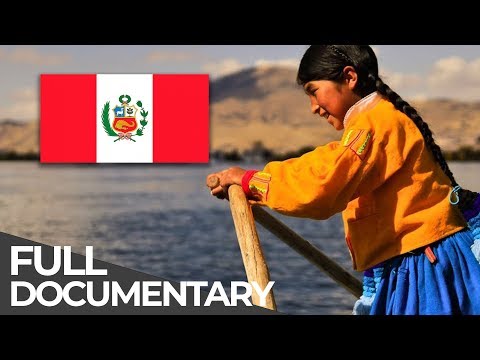
Most Dangerous Ways To School | PERU | Free Documentary
48:00
Free Documentary
Most Dangerous Ways To School | PERU | Free Documentary
It is early in the morning as Vidal gets himself ready. But before Vidal can brace himself for his dangerous way to school he must take care of his family`s sustenance – like every morning he checks the fishing nets. After work it`s time for a Uro bread and he drinks a Mate tea. Both things, like almost everything else here are made form the totora reeds. The Uros are a people that are very rooting in their tradition. They have even managed to preserve the Pukina, their mother language dating back to the colonial time. After two hours of paddling, Vidal reaches the center of the village. He floats past houses, where a family is building their new island since the old one has began to rot. It is the normal rhythm here. Every three years a new ground under the feet and a new roof above the head needs to be made. The construction begins by cutting the roots of the totora reeds in 30 cm long blocks. Five hundred of these are then tied together with ropes and soaked in the water for three months until they melt into one large block. On top of this block, the family piles totora reeds up to two meters high, until a part of the block sinks in the water and starts to rot. The gases released from this biomass under water produce a buoyant force that causes the new island to swim. After three hours of paddling, Vidal has finally reached the Uro elementary school where he learns to read and write. Here besides his native language, he also learns Spanish. It is not the language of his parents, but at the same time it is his chance of a future outside of his village.
Published Sep 8, 2015
Most Dangerous Ways To School | HIMALAYA (India) | Free Documentary
48:02
Free Documentary
Most Dangerous Ways To School | HIMALAYA (India) | Free Documentary
Twice a year the forbidding journey to the boarding school is necessary. Father Latak, looks to the sky and attempts to predict how the weather will develop. Only when he is sure that no storm is brewing, he starts to prepare the children for the trip over the river. It is a route that is so notorious, that it even has a name: Chadar - the path over the cloak of ice. One last time, his ten year old son Motup, plays in front of their hut. Motup is one of the few kids who regularly leave the village in order to attend one of the the better schools in town. Then the family gets ready for the long trip. The mother has sewn thick wool socks for the father and the children, and Tebean prayers and mantras are recited for protection along the way. Then the trip begins, where the children muss trust completely the experience and skill of their father. The first steps, only a few kilometres until the frozen river, seem easy for the family. But father Latak recognizes immediately that the spring has come early this year and the sun has already began to compromise the ice. This is not a good sign, since the thinner the ice the more dangerous the trip becomes. Latak goes before the children and tests with a stick before each step on the ice. Often the ice cracks a bit, but the ice remains whole. Latak knows that no one should travel the Chadar without a good reason. But the education of the children is a good enough reason to take on the risks involved. He knows that if he goes first and the ice carries his weight, that it will also carry the weight of the children. If it does not, it will be he that will fall in the icy water and not his two children. At the same time, Latak, Motup and the other members of the crew must keep a close eye on the mountains. The massive mountain ranges on both sides of them seem to be a scene form a picture book, peaceful and lordly. But there is danger lurking. At any given time, an avalanche can break out. Many times before people have been caught by avalanches here. In the mean time the sun has already thawed the middle of the river. But since there are steep rocks right and left, Latak must now search for a new path for them to continue on. He leaves Motup behind him and luckily finds a way. It is a 20 cm wide path on the rocks at the edge of the river, and up to ten meters high. They need almost an hour, skipping from rock to rock until they finally reach an area where the river is again covered with ice. Now they must find a place to set up camp as soon as possible before it becomes dark and the temperatures sink to as low as -30 degrees Celsius. Latak knows a cave where they will be protected and finally be able to get some rest. They must gather their strength because the most dangerous part of the Chadar still lies before them. The ice is almost completely melted. Only a 50 cm wide strip borders right and left the ice-cold water, making the river absolutely impassible. Rocky overhangs above the ice block the way. Father and son must now crawl its way to school. Father Latak tests his way over the ice on his belly. After any progress made, he pulls his son by their hands to him. There are countless dangerous situations that make this way to school so unpredictable. But after four days it is over, they have reached their goal; the city of Leh and the school.
Published Sep 7, 2015
India Rattled by Student Protests That Are Spreading
8:13
Bloomberg Television
India Rattled by Student Protests That Are Spreading
Student-led protests over exam paper leaks and economic opportunity have spread across India, drawing thousands of young people into the streets. Rahul Verma, Fellow at the Centre for Policy Research, discusses why this movement differs from past protests and what it could mean for Prime Minister Narendra Modi’s popularity. -------- More on Bloomberg Television and Markets Like this video? Subscribe and turn on notifications so you don't miss any videos from Bloomberg Markets & Finance: https://tinyurl.com/ysu5b8a9 Visit http://www.bloomberg.com for business news & analysis, up-to-the-minute market data, features, profiles and more. Connect with Bloomberg Television on: X: https://twitter.com/BloombergTV Facebook: https://www.facebook.com/BloombergTelevision Instagram: https://www.instagram.com/bloombergtv/ Connect with Bloomberg Business on: X: https://twitter.com/business Facebook: https://www.facebook.com/bloombergbusiness Instagram: https://www.instagram.com/bloombergbusiness/ TikTok: https://www.tiktok.com/@bloombergbusiness?lang=en Reddit: https://www.reddit.com/r/bloomberg/ LinkedIn: https://www.linkedin.com/company/bloomberg-news/ More from Bloomberg: Bloomberg Radio: https://twitter.com/BloombergRadio Bloomberg Surveillance: https://twitter.com/bsurveillance Bloomberg Politics: https://twitter.com/bpolitics Bloomberg Originals: https://twitter.com/bbgoriginals Watch more on YouTube: Bloomberg Technology: https://www.youtube.com/@BloombergTechnology Bloomberg Originals: https://www.youtube.com/@business Bloomberg Quicktake: https://www.youtube.com/@BloombergQuicktake Bloomberg Espanol: https://www.youtube.com/@bloomberg_espanol Bloomberg Podcasts: https://www.youtube.com/@BloombergPodcasts
Published Jul 24, 2026
The Apartheid Killer: Exposing the ghosts of South Africa’s past - BBC Africa Eye Documentary
1:15:27
BBC News Africa
The Apartheid Killer: Exposing the ghosts of South Africa’s past - BBC Africa Eye Documentary
One of worst mass killers in South Africa’s history is free from prison - and he is ready to speak. Thirty years since his atrocities, his victims are still fighting for closure and justice. Click here to subscribe to our channel 👉🏽 http://bit.ly/subscribetoafrica In the late 1980s, private security guard Louis van Schoor fatally shot dozens people in the South African city of East London. All of his victims were black. The youngest was just 12 years old. It is a bloodbath that places Van Schoor among the most prolific killers in history. He was caught and arrested in 1991. But with many of his shootings signed off by local police as ‘justifiable homicides,’ he would receive a shockingly light sentence - serving only 12 years in jail. Decades have past, but the relatives of his victims have never found closure. How many people did Van Schoor really kill? And who else was involved? It's been thirty years since the white supremacist apartheid regime crumbled. The unresolved trauma of this time has cast a long shadow across a nation. In piecing together the story of Van Schoor, this #BBCAfricaEye investigation exposes the disturbed past and racial injustices of South Africa itself. *** Africa Eye brings you original, investigative journalism revealing secrets and rooting out injustice in the world’s most complex and exciting continent. Nothing stays hidden forever. 🎞️ Check out all #BBCAfricaEye investigations here: https://www.youtube.com/playlist?list=PLajyiGz4JeyO2qgCvioQO-BzP1XCajJqt 🎧 Listen to the new six-episode World of Secrets investigative podcast series here: https://bbc.lnk.to/WoS 🚨UPDATE 26/07/24: South African mass killer Louis van Schoor dies of natural causes as victims still demand justice: https://bbc.in/3M0SzGt 🎥 Watch this film in FRENCH here: https://www.youtube.com/watch?v=VxhxpE-b65k Credits: Head of Longform and Investigations - Liz Gibbons Editor, Africa Eye - Tom Watson Directed and Filmed by - Charlie Northcott Co-Directed and Produced by - Isa-Lee Jacobson Executive Producer - Monica Garnsey Film Editor - Nick Cortés Creative Consultant - Peter Murimi Production Manager - Simon Frost Production Coordinator - Sarah Clarke Post Production: Coda Post Production Social Media Producer - Anusha Kumar Re-versioning Producer - Anna Payton Researchers - Zuko Blauw, Vuyani Simani, Nokwezi Ganya, Sipho Somyaii Additional Filming - Richard Kruger Composer - Anna Papadimitriou Additional Music - Weronika Grazyna Kijewska, Singalakha Njova Translators - Marlene Mvumbi, Lundi Njemla, Melissa-Lee Rootman Archive - Associated Press, Eastern Cape Archives, Records Department, Eastern Cape High Court, Reuters, Getty Images, Pond 5, SABC News Archives *** Subscribe: http://bit.ly/subscribetoafrica Website: https://www.bbc.com/africa Facebook: https://www.facebook.com/bbcnewsafrica/ Twitter: https://www.twitter.com/bbcafrica/ Instagram: https://www.instagram.com/bbcafrica/ #Documentary #SouthAfrica #Apartheid #RacialJustice #SouthAfricaNews #BBCAfrica #PoliceBrutality #investigations #investigativejournalism
Published Jul 21, 2024