All Cached YouTube Channel Videos

Reset
57,541 videos found Showing 24 on page 1,347 of 2,398
Clear Filters
Deadliest Journeys - Siberia, the Deadly Thaw
51:31
Best Documentary
Deadliest Journeys - Siberia, the Deadly Thaw
00:00 Every year the icy mists of Lake Baikal are the starting point for a testing journey for the men of the village of Kholodnaya on the northern shore of the lake. They must leave to carry supplies to the Evenks, reindeer herdsmen who live in isolation on the high plateaux of Siberia. 01:46 Siberian white hell 06:31 One of the region's most sacred places 11:09 Lake Baikal, a death trap 18:11 Victim of the thaw 25:55 Hunting the great Siberian grizzly bear 39:20 35 kilometers to go, with many more challenges 43:48 Farm at the end of the world For six months the herders have received no supplies. The winter has been too harsh for the supply trucks. Only Dmitri and a handful of men are prepared to take the risks in supplying these herders. They only have to travel 65 kilometers… and yet it takes them 48 hours! The spring has turned the road into a swamp. A veritable race against the clock is under way. Ruts, swollen rivers and forests: the six-wheel drive trucks will have a tough job taking on the natural elements. Sometimes there’s no other choice but to use the truck as a makeshift bulldozer to smash down the trees that block the road. When night falls with its icy temperatures, the mechanical parts are blocked with ice. And when nature forces the men to get out of the trucks another danger lurks… wolves. Further down in the valley, the thaw has transformed the Baikal into a deadly trap for those who live from it. In a very short time nothing will remain of the thick sheet of ice that has covered the lake the whole winter. Many fishermen have lost their lives on it, falling into water at 20. Because to find fish, they have to travel several kilometers across the surface of the lake, which is as big as Belgium. Anatoly, a fisherman, has just lost his best friend, whose car sank to the bottom of the lake in just seconds. Despite the danger, Anatoly has no choice but to chance the fragile melting ice. His 200 € monthly pension isn’t enough to feed himself properly. And when the lake becomes completely impracticable, they have to turn to an even more dangerous form of hunting: that of the great Siberian bear, the Grizzly. - Follow us on social media : Facebook : https://www.facebook.com/BestDocumentaryTV
Published Feb 23, 2018
With Just One Breath, This Free Diver Explores an Underwater World | Short Film Showcase
2:48
National Geographic
With Just One Breath, This Free Diver Explores an Underwater World | Short Film Showcase
When free diver Marese Secades enters the water, she feels nothing and everything at the same time. “Everything just melts away and I enter a dreamlike world, where I feel that I could fly.” ➡ Subscribe: http://bit.ly/NatGeoSubscribe ➡ Get More Short Film Showcase: http://bit.ly/ShortFilmShowcase About Short Film Showcase: The Short Film Showcase spotlights exceptional short videos created by filmmakers from around the web and selected by National Geographic editors. We look for work that affirms National Geographic's belief in the power of science, exploration, and storytelling to change the world. The filmmakers created the content presented, and the opinions expressed are their own, not those of National Geographic Partners. See more from National Geographic's Short Film Showcase at http://documentary.com Get More National Geographic: Official Site: http://bit.ly/NatGeoOfficialSite Facebook: http://bit.ly/FBNatGeo Twitter: http://bit.ly/NatGeoTwitter Instagram: http://bit.ly/NatGeoInsta Taking only a single breath, each moment of her dive is magnified as as she explores the breathtaking beauty beneath the water's surface. In this mesmerizing short by filmmaker Dani Bautista, submerge yourself in Secades' underwater world as she dives off the island of Coron, Palawan in the Philippines. Follow Marese Secades: http://www.instagram.com/marese.secades Follow Dani Bautista: http://www.danibautista.com http://www.vimeo.com/danibautista http://www.instagram.com/dcatbautista With Just One Breath, This Free Diver Explores an Underwater World | Short Film Showcase https://youtu.be/d4q_SwjF_Qo National Geographic https://www.youtube.com/natgeo
Published Feb 21, 2018
Building Green - Earth power
48:04
Best Documentary
Building Green - Earth power
Before running out of oil, we better have a look under our feet, where lies a clean and inexhaustible source of energy: the heat of the Earth! The volcanic and wet country of Iceland has plenty of steam to turn into electricity, it’s the Saudi Arabia of geothermy. Plants are popping up and growing fast. Markus, a foreman in charge of building cooling towers, essential pieces on the giant plant of Hellisheidi, deals all year long with a tight schedule, non English or nor Icelandic speaking workers, storms and… a lethal poisonous gas. Gretar, the geologist, has to map the underground and inform drillers how to provide daily more power to the plant. All of them together are tapping tens of steam wells one mile down and deeper, laying miles of pipes and installing always more generators. Iceland plans to become before 2050 the first nation to free itself from fossil fuels. In France, pioneers are working on a new technology. Far away from active volcanoes and steam reservoirs, they drill much deeper, up to 3 miles and inject water into hot rocks to make their own steam. Their latest breakthroughs will allow geothermal plants to produce power at half the temperature of the steam in Iceland. But as this method has never been tested before, solutions need to be found every time a problem arises, which is… quite often. Polo, with a 10 year experience on the project, Xavier, who’s his first job it is after graduating in mechanical engineering, and all their international European crew face adversity and never give up. So far, it’s only a small-scale pilot plant, but with big dreams: showing the world that this clean and renewable energy could be used by many of us. - Follow us on social media : Facebook : https://www.facebook.com/BestDocumentaryTV
Published Feb 21, 2018
High-Speed Video Shows How Flattie Spiders Attack With World's Fastest Spin | National Geographic
1:14
National Geographic
High-Speed Video Shows How Flattie Spiders Attack With World's Fastest Spin | National Geographic
When the flattie spider ambushes its prey, it spins so fast that it can turn three times in a blink of an eye. ➡ Subscribe: https://on.natgeo.com/4p5A0D6 About National Geographic: National Geographic is the world's premium destination for science, exploration, and adventure. Through their world-class scientists, photographers, journalists, and filmmakers, Nat Geo gets you closer to the stories that matter and past the edge of what's possible. Get More National Geographic: Official Site: https://nationalgeographic.com Instagram: https://instagram.com/natgeo Facebook: https://facebook.com/natgeo Threads: https://threads.com/@natgeo X: https://x.com/NatGeo LinkedIn: https://linkedin.com/company/national-geographic TikTok: https://tiktok.com/@natgeo Reddit: https://reddit.com/user/nationalgeographic Pinterest: https://pinterest.com/natgeo Researchers used high-speed video to show how fast the flattie spider spins to ambush its prey. This arachnids pivots on the leg closest to the prey. Like figure skaters drawing their arms inward to spin faster, it pulls its remaining legs off the ground towards its sternum. This maneuver can result in strike speeds up to 3,000 degrees per second, giving this spider the world’s fastest spin of any land animal. Read "How One of the Fastest Spinning Animals Catches Its Prey." https://news.nationalgeographic.com/2018/02/spinning-selenopidae-spider-hunts-prey-spd/?beta=true High-Speed Video Shows How Flattie Spiders Attack With World's Fastest Spin | National Geographic https://youtu.be/HKRL6Y7Oyvw National Geographic https://www.youtube.com/natgeo
Published Feb 20, 2018
Nvidia's Huang Sees China Becoming a More Open Market
4:09
Bloomberg Television
Nvidia's Huang Sees China Becoming a More Open Market
Nvidia CEO Jensen Huang talks about the trip he took to China with President Donald Trump and other American business leaders. Huang says he didn't talk to the Chinese directly about selling them H200 chips. Huang and Michael Dell speak to Bloomberg's Ed Ludlow at the Dell World conference in Las Vegas. -------- More on Bloomberg Television and Markets Like this video? Subscribe and turn on notifications so you don't miss any videos from Bloomberg Markets & Finance: https://tinyurl.com/ysu5b8a9 Visit http://www.bloomberg.com for business news & analysis, up-to-the-minute market data, features, profiles and more. Connect with Bloomberg Television on: X: https://twitter.com/BloombergTV Facebook: https://www.facebook.com/BloombergTelevision Instagram: https://www.instagram.com/bloombergtv/ Connect with Bloomberg Business on: X: https://twitter.com/business Facebook: https://www.facebook.com/bloombergbusiness Instagram: https://www.instagram.com/bloombergbusiness/ TikTok: https://www.tiktok.com/@bloombergbusiness?lang=en Reddit: https://www.reddit.com/r/bloomberg/ LinkedIn: https://www.linkedin.com/company/bloomberg-news/ More from Bloomberg: Bloomberg Radio: https://twitter.com/BloombergRadio Bloomberg Surveillance: https://twitter.com/bsurveillance Bloomberg Politics: https://twitter.com/bpolitics Bloomberg Originals: https://twitter.com/bbgoriginals Watch more on YouTube: Bloomberg Technology: https://www.youtube.com/@BloombergTechnology Bloomberg Originals: https://www.youtube.com/@business Bloomberg Quicktake: https://www.youtube.com/@BloombergQuicktake Bloomberg Espanol: https://www.youtube.com/@bloomberg_espanol Bloomberg Podcasts: https://www.youtube.com/@BloombergPodcasts
Published May 18, 2026
Self-Sacrificing Ants Refuse Treatment of Their Wounds | National Geographic
2:50
National Geographic
Self-Sacrificing Ants Refuse Treatment of Their Wounds | National Geographic
A new study reveals that after a raid on a termite nest, the injured ants are cared for by their comrades. ➡ Subscribe: https://on.natgeo.com/4p5A0D6 About National Geographic: National Geographic is the world's premium destination for science, exploration, and adventure. Through their world-class scientists, photographers, journalists, and filmmakers, Nat Geo gets you closer to the stories that matter and past the edge of what's possible. Get More National Geographic: Official Site: https://nationalgeographic.com Instagram: https://instagram.com/natgeo Facebook: https://facebook.com/natgeo Threads: https://threads.com/@natgeo X: https://x.com/NatGeo LinkedIn: https://linkedin.com/company/national-geographic TikTok: https://tiktok.com/@natgeo Reddit: https://reddit.com/user/nationalgeographic Pinterest: https://pinterest.com/natgeo Navy Seals abide by a code that no man is left behind. Termite-hunting ants abide by a similar code. A new study reveals that after a raid on a termite nest, the injured ants are cared for by their comrades. If kept by themselves, 80 percent of injured ants died. But if cared for by their nest-mates for even an hour, only a tenth died. Another finding of the study reveals how the ants prioritize who gets cared for and who doesn’t. In human health care, doctors decide which patients need to be helped the most. With ants, it’s the exact opposite. The injured ants themselves decide if they should be treated or not. When no help was in sight, injured ants made a beeline for the nest. But when nest-mates were near, they stumbled and fell, appearing “more injured” as a way to attract aid. But the ants play up their injuries only if they sensed that their problems were minor enough to be treated. If ants were mortally injured, they refused to cooperate, flailing their legs around when probed or picked up, forcing their helpers to abandon them. The mortally wounded ants choose to die rather than have energy and resources wasted on their futile rehabilitation. This discovery marks the first time non-human animals have been observed systematically nursing their wounded back to health. Read more in "'Paramedic' Ants Are the First to Rescue and Heal Their Wounded Comrades" https://news.nationalgeographic.com/2018/02/matabele-ants-rescue-heal-injured-soldiers/ Self-Sacrificing Ants Refuse Treatment of Their Wounds | National Geographic https://youtu.be/MVTj_gyZdY0 National Geographic https://www.youtube.com/natgeo
Published Feb 20, 2018
Nvidia's Huang, Michael Dell on Agentic AI, Memory Demand and China
20:29
Bloomberg Television
Nvidia's Huang, Michael Dell on Agentic AI, Memory Demand and China
Nvidia CEO Jensen Huang and Dell CEO Michael Dell discuss agentic AI, the demand for memory and the outlook for the China market with Bloomberg's Ed Ludlow on the sidelines of the Dell World event in Las Vegas. -------- More on Bloomberg Television and Markets Like this video? Subscribe and turn on notifications so you don't miss any videos from Bloomberg Markets & Finance: https://tinyurl.com/ysu5b8a9 Visit http://www.bloomberg.com for business news & analysis, up-to-the-minute market data, features, profiles and more. Connect with Bloomberg Television on: X: https://twitter.com/BloombergTV Facebook: https://www.facebook.com/BloombergTelevision Instagram: https://www.instagram.com/bloombergtv/ Connect with Bloomberg Business on: X: https://twitter.com/business Facebook: https://www.facebook.com/bloombergbusiness Instagram: https://www.instagram.com/bloombergbusiness/ TikTok: https://www.tiktok.com/@bloombergbusiness?lang=en Reddit: https://www.reddit.com/r/bloomberg/ LinkedIn: https://www.linkedin.com/company/bloomberg-news/ More from Bloomberg: Bloomberg Radio: https://twitter.com/BloombergRadio Bloomberg Surveillance: https://twitter.com/bsurveillance Bloomberg Politics: https://twitter.com/bpolitics Bloomberg Originals: https://twitter.com/bbgoriginals Watch more on YouTube: Bloomberg Technology: https://www.youtube.com/@BloombergTechnology Bloomberg Originals: https://www.youtube.com/@business Bloomberg Quicktake: https://www.youtube.com/@BloombergQuicktake Bloomberg Espanol: https://www.youtube.com/@bloomberg_espanol Bloomberg Podcasts: https://www.youtube.com/@BloombergPodcasts
Published May 18, 2026
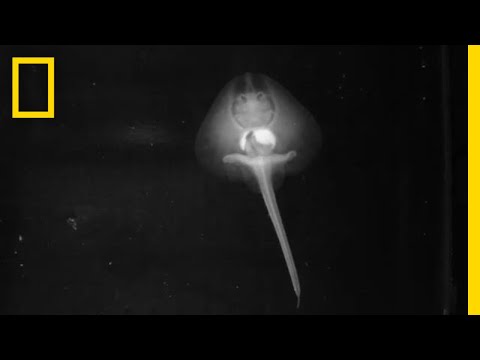
This Fish "Walks" Like Our Prehistoric Ancestors | National Geographic
1:42
National Geographic
This Fish "Walks" Like Our Prehistoric Ancestors | National Geographic
This animal, called a “little skate,” may be providing us clues to the evolutionary development of land-dwelling locomotive behavior. ➡ Subscribe: https://on.natgeo.com/4p5A0D6 About National Geographic: National Geographic is the world's premium destination for science, exploration, and adventure. Through their world-class scientists, photographers, journalists, and filmmakers, Nat Geo gets you closer to the stories that matter and past the edge of what's possible. Get More National Geographic: Official Site: https://nationalgeographic.com Instagram: https://instagram.com/natgeo Facebook: https://facebook.com/natgeo Threads: https://threads.com/@natgeo X: https://x.com/NatGeo LinkedIn: https://linkedin.com/company/national-geographic TikTok: https://tiktok.com/@natgeo Reddit: https://reddit.com/user/nationalgeographic Pinterest: https://pinterest.com/natgeo We knew that some fish could move along the sea floor in a way similar to walking. We didn’t know just how similar it was … until now. Most land-dwelling vertebrates use walking as their primary method of getting around. The neural circuits essential for walking are different than the neural circuits most fish use for swimming. With swimming, locomotion is driven by muscles around the spine. With walking, locomotion is driven by acute control of muscles in the limbs. Recent genetic analysis reveals that the little skate carries the same gene as four-legged animals. This discovery helps paint a clearer picture of the origins of land-dwelling creatures. Read more in "What This Walking Fish Can Teach Us About Evolution" https://news.nationalgeographic.com/2018/02/skate-neural-genetics-walking-human-evolution-spd/ This Fish "Walks" Like Our Prehistoric Ancestors | National Geographic https://youtu.be/bP-IEhXGjY0 National Geographic https://www.youtube.com/natgeo
Published Feb 20, 2018
Colombia : the mole children (full documentary)
26:41
Best Documentary
Colombia : the mole children (full documentary)
200 metres underground, in unhealthy shafts, they dig… they are 9 or 10 years old and they work in the mines of Boyaca, the biggest coal deposit in Colombia. It was in 1993 that a report documented the lives of Jairo, Oscar, Jaime... the mole children. 17 years later, Edouard Bergeon found them and showed them the images they had never seen. “I’m here underground like a mole. Imagine what I’m going to end up like. I started working when I was 10. I’m 32 and I’m still down the mine. I do it for my kids, to give them food and allow them to study.” His children, his wife, his mother discover for the first time the images of Oscar aged 10 pushing his coal barrow. Jaider also has a family, which he only sees at weekends. During the week he digs coal a six-hour drive from his home. Things haven’t changed much since his childhood. At 13, Jaider was already denouncing his working conditions, “I risk my life every day and I’m scared. I know people who never came out.” The image that stays in the memory is of Jairo’s face as he comes out of the mine, panting, with a sack of coal on his back. Today Jairo has been spared the silicosis that is killing his father. He left the mine to join the army. “If I weren’t in the army, I’d still be down the mine. And tomorrow I’d be in the same condition as my father.” Jaider wanted to show his colleagues the documentary filmed 17 years ago, in which he was one of the principal characters. “Seeing such a small child with a sack of coal on his back. Out of breath… It’s very hard. When I started I was 9… before Jaider. Now you can’t make children work. The slavery of that time is over.” And yet… when Oscar takes reporters 170 metres underground... deep in the bowels of the earth, five mole children of today, five little black faces like his, stare at Jaider, the mole child of 1993. - Follow us on social media : Facebook : https://www.facebook.com/BestDocumentaryTV
Published Feb 19, 2018
Nearly 150,000 Orangutans Lost to Logging, Palm Oil, and Human Conflict | National Geographic
1:13
National Geographic
Nearly 150,000 Orangutans Lost to Logging, Palm Oil, and Human Conflict | National Geographic
Nearly 150,000 orangutans vanished from Borneo over a 16-year period, a new study found. ➡ Subscribe: https://on.natgeo.com/4p5A0D6 About National Geographic: National Geographic is the world's premium destination for science, exploration, and adventure. Through their world-class scientists, photographers, journalists, and filmmakers, Nat Geo gets you closer to the stories that matter and past the edge of what's possible. Get More National Geographic: Official Site: https://nationalgeographic.com Instagram: https://instagram.com/natgeo Facebook: https://facebook.com/natgeo Threads: https://threads.com/@natgeo X: https://x.com/NatGeo LinkedIn: https://linkedin.com/company/national-geographic TikTok: https://tiktok.com/@natgeo Reddit: https://reddit.com/user/nationalgeographic Pinterest: https://pinterest.com/natgeo Between 1999 and 2015 more than half of the entire island's population disappeared due in part to habitat loss driven by palm oil harvesting and logging. Poaching and human interaction also contributed to the dramatic loss. Over the next 35 years, researchers predict an additional 45,000 orangutans will be lost. Read more in "Nearly 150,000 Bornean Orangutans Lost Since 1999, Cutting Population By Half." https://news.nationalgeographic.com/2018/02/orangutan-habitat-loss-hunting-killing-borneo-spd Nearly 150,000 Orangutans Lost to Logging, Palm Oil, and Human Conflict | National Geographic https://youtu.be/yQeNHT0jgvY National Geographic https://www.youtube.com/natgeo
Published Feb 19, 2018
Building Green - Power Tower
48:01
Best Documentary
Building Green - Power Tower
In downtown Guangzhou, China, one of the greenest structures on earth is rising. Known as Pearl River Tower, the 71-storey building will rely on just wind and sunlight for its power supply. This green skyscraper epitomizes the super tall corporate headquarter buildings of tomorrow as an iconic, high performance structure, that is designed in such harmony with its environment that it potentially produces as much energy as it consumes. The building’s sculptural form guides wind to a pair of openings at its mechanical floors. The rapid winds push turbines that generate energy for the building’s heating, ventilation and air conditioning systems. The openings also provide structural relief, by allowing wind to pass through the building instead of pressing against it. Abundant natural light, solar power enhance the building’s environmentally friendly nature. Roger Frechette, one of the most famous architect designers in sustainable buildings of the SOM architecture firm, details his conception about tomorrow’s architecture and his work in coordination with the Chinese teams to make this dream come true. Mr Ciu, manager of the Chinese construction teams, explains the numerous challenges and subtleties behind this gigantic construction site. Let’s go to the heart of action and take a front row seat in the creation of the world’s greenest skyscraper. - Follow us on social media : Facebook : https://www.facebook.com/BestDocumentaryTV
Published Feb 17, 2018
What's Driving Tigers Toward Extinction? | National Geographic
5:47
National Geographic
What's Driving Tigers Toward Extinction? | National Geographic
With fewer than 4,000 of these iconic animals in the wild today, tiger populations have been in a rapid decline over the past century. These already endangered big cats are being driven towards extinction, as demand for tiger products continue. Learn how traditional Chinese medicine, tiger bone wine, and even selfies are complicit in this destruction. ➡ Subscribe: https://on.natgeo.com/4p5A0D6 About National Geographic: National Geographic is the world's premium destination for science, exploration, and adventure. Through their world-class scientists, photographers, journalists, and filmmakers, Nat Geo gets you closer to the stories that matter and past the edge of what's possible. Get More National Geographic: Official Site: https://nationalgeographic.com Instagram: https://instagram.com/natgeo Facebook: https://facebook.com/natgeo Threads: https://threads.com/@natgeo X: https://x.com/NatGeo LinkedIn: https://linkedin.com/company/national-geographic TikTok: https://tiktok.com/@natgeo Reddit: https://reddit.com/user/nationalgeographic Pinterest: https://pinterest.com/natgeo For more on tiger conservation and the latest conservation news, check out National Geographic's Wildlife Watch. https://news.nationalgeographic.com/wildlife-watch/ What's Driving Tigers Toward Extinction? | National Geographic https://youtu.be/qhrT0v7QSvc National Geographic https://www.youtube.com/natgeo
Published Feb 19, 2018
Building Green - Sun on Earth
48:02
Best Documentary
Building Green - Sun on Earth
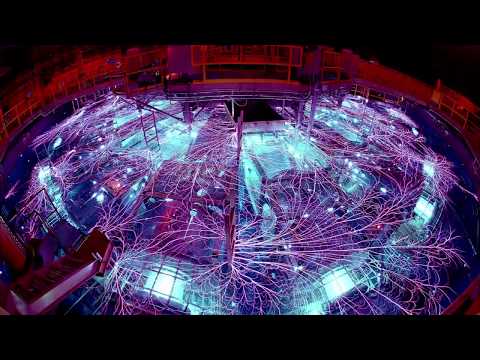
A huge global increase in energy consumption is inevitable. Renewable energies alone will not satisfy our needs. While nuclear energy is often associated with fission and its dangers, scientists across the world are trying to master its bright side. Nuclear fusion is a safe, clean and unlimited source of energy. But unfortunately, it is incredibly difficult to master. There are different ways of going about it. Three main competing paths are currently being explored : -Tokamaks, which confine a hot plasma at a temperature of one hundred million degrees in a steady state within a magnetic field. -Lasers, which are used like hammers to compress a target and make it explode. -The Z-pinch machine, which attempts to light a nuclear fire by compressing a tiny pellet of gas through an intense X-ray pulse. While the construction of Iter, the international super tokamak, is about to start in Southern France, teams are working flat out to solve physics and engineering problems. Let’s follow the team of the Tore Supra tokamak as they develop their machine and install new heating antennas. At the Megajoule Laser, 240 giant lasers are being assembled. They will fire a target in a 30-feet diameter metal sphere. Everything must be immaculately clean as a speck of dust could burn and ruin extremely costly equipment. In the Sandia laboratories, as the entire Z-machine has just been modernized to double its power, the team is already looking towards the future. In collaboration with Russia, revolutionary components are being tested. Putting their rivalries aside, all these scientists share their knowledge of plasma, the fourth state of matter after its gaseous phase. Only when the secrets of plasma are mastered will the gates to fusion open. - Follow us on social media : Facebook : https://www.facebook.com/BestDocumentaryTV
Published Feb 14, 2018
Watch Face Paint Tell the Story of Human Evolution in One Minute | Short Film Showcase
1:55
National Geographic
Watch Face Paint Tell the Story of Human Evolution in One Minute | Short Film Showcase
Artist Emma Allen imagines the future of human evolution using face paint, a mirror, and a camera. Watch the progression from single-celled organism to cyborg unfold in this stunning animated self-portrait. ➡ Subscribe: http://bit.ly/NatGeoSubscribe ➡ Get More Short Film Showcase: http://bit.ly/ShortFilmShowcase About Short Film Showcase: The Short Film Showcase spotlights exceptional short videos created by filmmakers from around the web and selected by National Geographic editors. We look for work that affirms National Geographic's belief in the power of science, exploration, and storytelling to change the world. The filmmakers created the content presented, and the opinions expressed are their own, not those of National Geographic Partners. See more from National Geographic's Short Film Showcase at http://documentary.com Get More National Geographic: Official Site: http://bit.ly/NatGeoOfficialSite Facebook: http://bit.ly/FBNatGeo Twitter: http://bit.ly/NatGeoTwitter Instagram: http://bit.ly/NatGeoInsta To see more of Emma Allen's work, watch "This Artist's Amazing Transformation Will Blow Your Mind" https://www.youtube.com/watch?v=8DkClfndrH8&index=85&list=PLivjPDlt6ApTDlm7OufY6HAzNmFAqxWSo Follow Emma Allen: http://www.emmaallen.org/ http://www.youtube.com/user/emmaallen https://www.facebook.com/paintfaces Watch Face Paint Tell the Story of Human Evolution in One Minute | Short Film Showcase https://youtu.be/zH1cgoVpz8g National Geographic https://www.youtube.com/natgeo
Published Feb 18, 2018