Forbidden Islands
13 Secret Places in Jamaica That Almost No One Knows
Lightning struck the gunpowder magazine of a fort on Kingston Harbour in 1763, according to the Jamaica National Heritage Trust, and the blast killed 300 people and broke windows up to 17 miles away. That fort is the last of 13 places in Jamaica that almost no one knows. Most of the others stay little known for plain reasons: a road the Gleaner calls one of the loneliest on the island, a ruin without signs, a waterfall reached through a private yard, a cave closed to the public. Several are still waiting on a decision.
In this video, we count down all thirteen:
→ Clarendon: a short, clear river with no alligator in it, where researchers reported in 2003 that four West Indian manatees had been held since 1981, and recommended releasing the three females they found at sea
→ St Ann: one of the biggest bat roosts on the island, in a cave about 45 metres down by the Gleaner's account, closed to the public to protect the colony
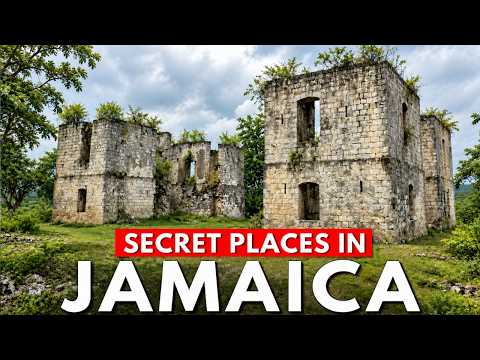
→ St Thomas: a great house built like a fort by enslaved people, with loopholes for cannon and muskets, destroyed in the 1907 earthquake and reached by a road online maps hardly recognise
→ Trelawny: a rock shelter about 15 metres from a country road, where a scientist dug out the jaw and thigh bone of a monkey in January 1920, a species thought to have died out around 900 years ago
→ St Ann: a lake that comes and goes on low ground beside the main road to the north coast, which by February 2006 had affected some 88 families and stopped burials in the town
→ St Andrew: a garden set up in 1868 for the tree that yields quinine, between 4,500 and 5,500 feet up, at the end of a road the national park says needs four-wheel drive
→ St Mary: a waterfall named for the leader of the 1760 rising, reached in one writer's account through a private yard, where local legend says he hid in caves beneath the rocks
→ Portland: a 64-acre island off Port Antonio, bought by Errol Flynn in the early 1940s, where the Port Authority had put US$2.7 million by 2007 before a 2025 promise to make it a nature reserve
→ St Andrew: an evacuation camp ordered in 1940 for people from Gibraltar, with 112 wooden barracks behind a wire fence, on the ground where the University of the West Indies at Mona now stands
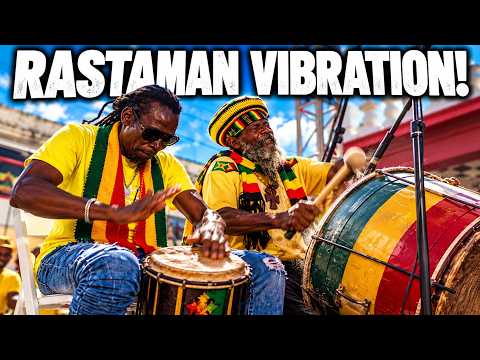
→ St Catherine: the hilltop where the first Rastafarian village was set up in 1940, raided from 1941 and destroyed in 1954, with ownership of the land still in doubt as of 2022
→ Kingston Harbour: a small cay where the body of the pirate Calico Jack was hung in a cage in 1720, and where in 2002 about 20 percent of its face was cut into a wall 18 metres deep
→ St Andrew: an army camp 4,200 feet up in the Blue Mountains, built after disease on the plains was killing one soldier every two and a half days on average
And at number one: Fort Augusta, on the western shore of Kingston Harbour in St Catherine. Building began in 1740 on a swamp that had to be filled first, and the fort was finished in the 1750s for 80 guns. Much later it became the island's only prison for women, until the inmates were moved out in 2017 over mosquitoes and the threat of flooding. In 2021 a plan to reuse it was set aside because it sits on the sea coast, in the path of storms.
Subscribe if you want the next list when it lands.
SOURCES & FURTHER READING
Jamaica National Heritage Trust, on Fort Augusta, Newcastle, Stokes Hall and Fort Haldane
National Environment and Planning Agency, on Alligator Hole and the Canoe Valley Game Reserve
Mignucci-Giannoni and colleagues, Latin American Journal of Aquatic Mammals 2(1) (2003), on the Alligator Hole manatees
McFarlane, Oryx 20(1) (1986), on Jamaica's cave-dependent bats
Jamaican Caves Organisation (7 April 2005), on Long Mile Cave
Cooke and colleagues, Journal of Mammalogy 98(4) (2017), on the dating of the Jamaican monkey Xenothrix
Jamaica55, Government of Jamaica, on Major Luke Stokes
Ministry of Agriculture and the Blue and John Crow Mountains National Park, on Cinchona
Government of Gibraltar press release 315/2015 and the University of the West Indies, Mona, on Gibraltar Camp
Jamaica Information Service (2006, 2012, 2016 and 2025), on Moneague, Fort Augusta, Pinnacle and Navy Island
Trench and colleagues, Revista de Biología Tropical 62, Supplement 3 (2014), on Rackham's Cay and Kingston Harbour
World History Encyclopedia, on John Rackham; Associated Press (2014), on Pinnacle; World of Waterfalls, on Tacky Falls; Adventures From Elle (2025), on Stokes Hall
Reporting from the Jamaica Gleaner (2014 to 2026, including Pieces of the Past) and the Jamaica Observer (2006, 2016 and 2021)
#ForbiddenIslands #Jamaica #SecretPlaces #JamaicanHistory #FortAugusta #CalicoJack #NavyIsland #ErrolFlynn #Manatees #StAnnJamaica
Published Oct 25, 2026