All Cached YouTube Channel Videos

Reset
164,293 videos found Showing 24 on page 3,974 of 6,846
Clear Filters
Rescuing a Fierce Leopard: See What It Takes | Expedition Raw
4:25
▶
National Geographic
Rescuing a Fierce Leopard: See What It Takes | Expedition Raw
What would you do if you came face-to-face with a 175 pound, agitated leopard? If you're conservation power-couple Marlice and Rudie van Vuuren, you've been on the receiving end of such a scenario about 112 times. ➡ Subscribe: http://bit.ly/NatGeoSubscribe ➡ Watch all clips of Expedition Raw here: http://bit.ly/WatchmoreExpeditionRaw ➡ Get More Expedition Raw on Youtube: http://bit.ly/NGExpeditionRaw About Expedition Raw: Surprises, challenges, and amazing behind-the-scenes moments captured by National Geographic explorers in the field. Get More National Geographic: Official Site: http://bit.ly/NatGeoOfficialSite Facebook: http://bit.ly/FBNatGeo Twitter: http://bit.ly/NatGeoTwitter Instagram: http://bit.ly/NatGeoInsta About National Geographic: National Geographic is the world's premium destination for science, exploration, and adventure. Through their world-class scientists, photographers, journalists, and filmmakers, Nat Geo gets you closer to the stories that matter and past the edge of what's possible. As conservationists and National Geographic Big Cat Initiative grantees, the van Vuurens are on the frontlines of human-wildlife conflict and have translocated more than a hundred big cats in less than a decade in order to mitigate that conflict. Watch the video to see how one epic leopard translocation unfolds. National Geographic also sat down with the couple at their wildlife sanctuary to talk about their work. National Geographic: How did you get started in conservation work? Marlice: When we started N/a’an ku sê Wildlife Sanctuary ten years ago, we got in cheetahs and leopards, and we realized we could not only take animals in, we had to deal with the source of the problem. Farmers normally would catch cheetahs and leopards with capture cages the minute they start losing livestock to the carnivores. National Geographic: How does your Rapid Response Unit get involved? Rudie: The first prize for us is to release that animal on the spot, if we can convince the farmer that this is not really a problem animal and that it's an opportunistic livestock raider. Second prize for us would be if the farmer agrees that we collar and release the animal there and then. The collar has a satellite unit and we can see exactly where the animal is. We share that with the farmer and he often shares that with his neighbors. He starts seeing how these animals move, we inform him when we see a kill pattern on the downloads, and ask him to go and look at what is the prey that that animal caught, is it natural prey or is it livestock? This is how we engage with the farmers and how we work with them. Farmers are some of the best conservationists in this country. One of our last resorts is to translocate that animal to a protected area. National Geographic: Why is there such high likelihood of having big cats on farmland in Namibia? Rudie: Cheetahs and leopards in Namibia occur mostly outside of protected areas, and that is mostly commercial farmland, so the chances of conflict are very high. When we talk about human-wildlife conflict we always look at the wildlife side of things, but there's a human component. Marlice: Remember, we are both Namibian. We have our own cattle here, our own sheep, and our own goats. We practice what we preach. We come there as a farmer and somebody that just wants to help. We don't want to tell you what you're doing wrong, we come with options. National Geographic: Why should someone across the world somewhere—who may never see a leopard in the wild—care about this? Rudie: If we lose these carnivores, it will have severe effects to the ecosystem. If carnivores disappear from our ecosystem, baboon numbers will go through the roof. If baboon numbers go through the roof, disease transmission between baboons and humans can increase and we could have another disease that could influence the whole world, and people will trace it back to Africa because leopards disappeared. I don't think people realize what the impact is if we lose a species. Everybody is at the disadvantage, not only the people that love them. For more on big cats, tune in to Big Cat Week, premiering Monday, Feb. 20, at 9/8c on Nat Geo WILD and learn more about the National Geographic Big Cats Initiative, a global initiative that supports scientists and conservationists working to save big cats in the wild. http://www.nationalgeographic.org/projects/big-cats-initiative/ Learn more about the science and exploration supported by the nonprofit National Geographic Society at http://natgeo.org/grants. SENIOR PRODUCER: Sarah Joseph PRODUCER/EDITOR: Nora Rappaport Rescuing a Fierce Leopard: See What It Takes | Expedition Raw https://youtu.be/NYeEmlCZ29o National Geographic https://www.youtube.com/natgeo
Published Feb 10, 2017
India Puts Starlink Launch on Hold
1:08
▶
Bloomberg Television
India Puts Starlink Launch on Hold
India has effectively frozen approvals for Starlink, according to people familiar with the matter. Officials are concerned about the use of satellite terminals in the Iran war, creating a new hurdle for Elon Musk's internet service in a key growth market. -------- More on Bloomberg Television and Markets Like this video? Subscribe and turn on notifications so you don't miss any videos from Bloomberg Markets & Finance: https://tinyurl.com/ysu5b8a9 Visit http://www.bloomberg.com for business news & analysis, up-to-the-minute market data, features, profiles and more. Connect with Bloomberg Television on: X: https://twitter.com/BloombergTV Facebook: https://www.facebook.com/BloombergTelevision Instagram: https://www.instagram.com/bloombergtv/ Connect with Bloomberg Business on: X: https://twitter.com/business Facebook: https://www.facebook.com/bloombergbusiness Instagram: https://www.instagram.com/bloombergbusiness/ TikTok: https://www.tiktok.com/@bloombergbusiness?lang=en Reddit: https://www.reddit.com/r/bloomberg/ LinkedIn: https://www.linkedin.com/company/bloomberg-news/ More from Bloomberg: Bloomberg Radio: https://twitter.com/BloombergRadio Bloomberg Surveillance: https://twitter.com/bsurveillance Bloomberg Politics: https://twitter.com/bpolitics Bloomberg Originals: https://twitter.com/bbgoriginals Watch more on YouTube: Bloomberg Technology: https://www.youtube.com/@BloombergTechnology Bloomberg Originals: https://www.youtube.com/@business Bloomberg Quicktake: https://www.youtube.com/@BloombergQuicktake Bloomberg Espanol: https://www.youtube.com/@bloomberg_espanol Bloomberg Podcasts: https://www.youtube.com/@BloombergPodcasts
Published Jun 10, 2026
Alcaraz supérieur à Sinner sur gazon ? Djokovic exagère-t-il ? Retour Gagnant avec Nicolas Escudé
28:20
▶
Eurosport France
Alcaraz supérieur à Sinner sur gazon ? Djokovic exagère-t-il ? Retour Gagnant avec Nicolas Escudé
A peine la saison sur terre battue terminée que démarre celle sur gazon. Courte, intense, relevée... un peu comme l'émission qui vous attend avec Anne Boyer entourée de notre consultant Nicolas Escudé et son acolyte de la semaine Thomas Morel, journaliste que vous pourrez retrouver sur Eurosport et MAX aux commentaires des matches de Halle et du Queen's. Au sommaire des débats de la semaine, Novak Djokovic a déclaré privilégier désormais les Jeux Olympiques de Los Angeles en 2028. Le Serbe, champion olympique en titre, aura 41 ans. Pourquoi une telle déclaration alors que l'on sait qu'il vise surtout un 25e titre en Grand Chelem depuis 2024 ? Est-ce qu'il ne jouerait pas la carte du bluff pour s'enlever de la pression ? (01:15) Zoom également sur Carlos Alcaraz et Jannik Sinner qui débuteront officiellement leur saison sur herbe respectivement au Queen's à Londres et à Halle en Allemagne, avant de prendre la direction de Wimbledon. Avec cette question : la version Alcaraz sur gazon ne serait-elle pas meilleure que la version Alcaraz sur terre battue, lui qui reste sur deux titres à Wimbledon ? (08:27) Et Jannik Sinner parviendra-t-il à être plus fort que sur terre ? (12:18) Enfin, pourquoi n'y a-t-il pas de Masters 1000 sur gazon ? Cette catégorie de tournoi existe sur toutes les autres surfaces, mais persiste à ne pas sur jouer sur herbe : quelles en sont les raisons principales ? (18:45) Bienvenue dans Retour Gagnant ! Présentation : Anne Boyer Réalisation et montage : Sébastien Petit Animation et graphisme : Quentin Guichard, Nolwenn Bigoin et Romain Kurtz Abonnez-vous à notre chaîne 👉 https://bit.ly/3OetlmT Suivez les meilleurs événements sur Eurosport via la plateforme de streaming Max 👉 https://bit.ly/3z9rUE4 Téléchargez notre appli pour iPhone 👉 https://apple.co/3MNSALG Téléchargez notre appli pour Android 👉 https://bit.ly/3MNSBiI #highlights #tennis #alcaraz #sinner #halle #queens Toute l'actualité du sport 👉 https://www.eurosport.fr
Published Jun 17, 2025
Blackstone's Brand on IPO Returns, Anthropic Partnership
7:34
▶
Bloomberg Television
Blackstone's Brand on IPO Returns, Anthropic Partnership
"The year of the IPO is definitely on," Martin Brand, head of Blackstone Capital Partners, says while speaking with Bloomberg's Dani Burger at the SuperReturn International Conference in Berlin. -------- More on Bloomberg Television and Markets Like this video? Subscribe and turn on notifications so you don't miss any videos from Bloomberg Markets & Finance: https://tinyurl.com/ysu5b8a9 Visit http://www.bloomberg.com for business news & analysis, up-to-the-minute market data, features, profiles and more. Connect with Bloomberg Television on: X: https://twitter.com/BloombergTV Facebook: https://www.facebook.com/BloombergTelevision Instagram: https://www.instagram.com/bloombergtv/ Connect with Bloomberg Business on: X: https://twitter.com/business Facebook: https://www.facebook.com/bloombergbusiness Instagram: https://www.instagram.com/bloombergbusiness/ TikTok: https://www.tiktok.com/@bloombergbusiness?lang=en Reddit: https://www.reddit.com/r/bloomberg/ LinkedIn: https://www.linkedin.com/company/bloomberg-news/ More from Bloomberg: Bloomberg Radio: https://twitter.com/BloombergRadio Bloomberg Surveillance: https://twitter.com/bsurveillance Bloomberg Politics: https://twitter.com/bpolitics Bloomberg Originals: https://twitter.com/bbgoriginals Watch more on YouTube: Bloomberg Technology: https://www.youtube.com/@BloombergTechnology Bloomberg Originals: https://www.youtube.com/@business Bloomberg Quicktake: https://www.youtube.com/@BloombergQuicktake Bloomberg Espanol: https://www.youtube.com/@bloomberg_espanol Bloomberg Podcasts: https://www.youtube.com/@BloombergPodcasts
Published Jun 10, 2026
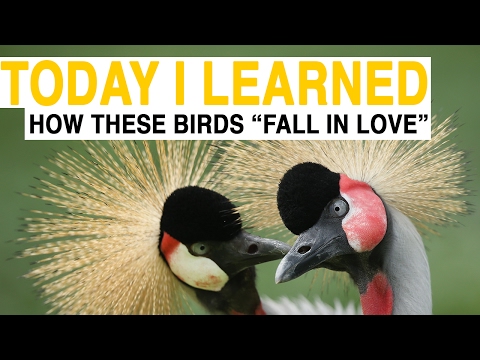
TIL: How to Play Matchmaker for Beautiful, Endangered Birds | Today I Learned
2:33
▶
National Geographic
TIL: How to Play Matchmaker for Beautiful, Endangered Birds | Today I Learned
National Geographic Explorer Olivier Nsengimana has set out to rescue captive grey crowned cranes. Along with his team, he began a program taking cranes out of captivity and placing them back into their natural habitat. ➡ Subscribe: http://bit.ly/NatGeoSubscribe ➡ Watch All Today I Learned Clips here: http://bit.ly/2WatchTodayILearned ➡ Get More TIL (Today I Learned): http://bit.ly/MoreTIL About TIL (Today I Learned): Love crazy facts? We do too. Get ready to amaze your friends with some of the strangest facts you’ve ever heard. National Geographic explorers tell you new, obscure, and amazing things about the world (and beyond). Get More National Geographic: Official Site: http://bit.ly/NatGeoOfficialSite Facebook: http://bit.ly/FBNatGeo Twitter: http://bit.ly/NatGeoTwitter Instagram: http://bit.ly/NatGeoInsta About National Geographic: National Geographic is the world's premium destination for science, exploration, and adventure. Through their world-class scientists, photographers, journalists, and filmmakers, Nat Geo gets you closer to the stories that matter and past the edge of what's possible. The Endangered Grey Crowned Crane is a monogamous species that mates for life. Due to the commodification of these birds, they are captured and sold as household ornaments. Taken into captivity, they live out their lives in backyards and hotels. Crane 110 spent most of her life confined to a backyard, unable to search for a mate. National Geographic Explorer Olivier Nsengimana has set out to rescue captive cranes like Crane 110. Along with his team, he began a program taking cranes out of captivity and placing them back into their natural habitat. Prior to returning the captive cranes to the wild, the cranes are given a full medical examination to ensure their health. They are then free to search for their mate. “The cranes begin to bond. Like people, they date,” states Nsengimana. When choosing a partner, cranes call and dance to one another. Nsengimana adds: “In some cases they will just fall in love on the first date, or they will have to try others before they will find the right one for life.” Almost two years after Crane 110 was released, she bonded with Crane 194, who also came from a backyard. “Our project is giving a second chance to those cranes that were once in captivity to choose the right partner, and contribute to the wild population of Great Crowned Cranes,” says Nsengimana. PRODUCER/EDITOR: Laurence Alexander SERIES PRODUCER: Christopher Mattle ASSOCIATE PRODUCER: Elaina Kimes Special thanks to Akagera National Park, Akagera Management Company, African Parks, and the Rwandan Development Board. TIL: How to Play Matchmaker for Beautiful, Endangered Birds | Today I Learned https://youtu.be/u8E1-2tx2AM National Geographic https://www.youtube.com/natgeo
Published Feb 10, 2017
Trump Says Iran Must ‘Pay the Price’ for Taking Too Long on a Deal
1:42
▶
Bloomberg Television
Trump Says Iran Must ‘Pay the Price’ for Taking Too Long on a Deal
President Donald Trump posted a warning on social media Wednesday that Iran has taken too long to come to terms and will “pay the price.” Tyler Kendall reports on Bloomberg Television. -------- More on Bloomberg Television and Markets Like this video? Subscribe and turn on notifications so you don't miss any videos from Bloomberg Markets & Finance: https://tinyurl.com/ysu5b8a9 Visit http://www.bloomberg.com for business news & analysis, up-to-the-minute market data, features, profiles and more. Connect with Bloomberg Television on: X: https://twitter.com/BloombergTV Facebook: https://www.facebook.com/BloombergTelevision Instagram: https://www.instagram.com/bloombergtv/ Connect with Bloomberg Business on: X: https://twitter.com/business Facebook: https://www.facebook.com/bloombergbusiness Instagram: https://www.instagram.com/bloombergbusiness/ TikTok: https://www.tiktok.com/@bloombergbusiness?lang=en Reddit: https://www.reddit.com/r/bloomberg/ LinkedIn: https://www.linkedin.com/company/bloomberg-news/ More from Bloomberg: Bloomberg Radio: https://twitter.com/BloombergRadio Bloomberg Surveillance: https://twitter.com/bsurveillance Bloomberg Politics: https://twitter.com/bpolitics Bloomberg Originals: https://twitter.com/bbgoriginals Watch more on YouTube: Bloomberg Technology: https://www.youtube.com/@BloombergTechnology Bloomberg Originals: https://www.youtube.com/@business Bloomberg Quicktake: https://www.youtube.com/@BloombergQuicktake Bloomberg Espanol: https://www.youtube.com/@bloomberg_espanol Bloomberg Podcasts: https://www.youtube.com/@BloombergPodcasts
Published Jun 10, 2026
These Kaleidoscopic Masterpieces Are Invisible to the Naked Eye | Short Film Showcase
4:41
▶
National Geographic
These Kaleidoscopic Masterpieces Are Invisible to the Naked Eye | Short Film Showcase
Struck by the beauty and symmetry of diatoms, modern-day microscopist Klaus Kemp recently revived the Victorian art of diatom arrangement. In this short film by Matthew Killip, peer into the peculiar art form and witness a modern-day diatom master at work. ➡ Subscribe: http://bit.ly/NatGeoSubscribe ➡ Get More Short Film Showcase: http://bit.ly/ShortFilmShowcase About Short Film Showcase: The Short Film Showcase spotlights exceptional short videos created by filmmakers from around the web and selected by National Geographic editors. We look for work that affirms National Geographic's belief in the power of science, exploration, and storytelling to change the world. The filmmakers created the content presented, and the opinions expressed are their own, not those of National Geographic Partners. See more from National Geographic's Short Film Showcase at http://documentary.com Get More National Geographic: Official Site: http://bit.ly/NatGeoOfficialSite Facebook: http://bit.ly/FBNatGeo Twitter: http://bit.ly/NatGeoTwitter Instagram: http://bit.ly/NatGeoInsta About National Geographic: National Geographic is the world's premium destination for science, exploration, and adventure. Through their world-class scientists, photographers, journalists, and filmmakers, Nat Geo gets you closer to the stories that matter and past the edge of what's possible. With between 20,000 and 2 million species, diatoms are one of the largest and most important ecological groups of organisms. Through photosynthesis, it’s been estimated that these single-cell algae produce up to one-quarter of the Earth’s oxygen. In addition to their important role within the ecosystem, diatoms also possess uniquely beautiful cell structures. During the Victorian era, this beauty inspired artists to position the jewel-like cells into dazzling arrangements under the lens of the microscope. This unusual art form was almost lost with time, but was recently revived by modern-day microscopist Klaus Kemp. Struck by the beauty and symmetry of diatoms, Kemp worked obsessively for 8 years to perfect his own technique. In this short film by Matthew Killip, peer into the peculiar art of diatom arrangement and witness a modern-day diatom master at work. Klaus Kemp - http://www.diatoms.co.uk/ Matthew Killip:http://www.matthewkillip.com/ These Kaleidoscopic Masterpieces Are Invisible to the Naked Eye | Short Film Showcase https://youtu.be/qxkbSk--EUY National Geographic https://www.youtube.com/natgeo
Published Feb 9, 2017
US Inflation Accelerates in May, While Core CPI Softens
1:42
▶
Bloomberg Television
US Inflation Accelerates in May, While Core CPI Softens
US inflation accelerated in May with the Iran war pushing up energy prices, as the consumer price index climbed 4.2% from a year earlier, the most since early 2023. The core CPI, which excludes food and energy, increased 0.2% from April and 2.9% from a year earlier. Michael McKee breaks down the numbers on Bloomberg Television. -------- More on Bloomberg Television and Markets Like this video? Subscribe and turn on notifications so you don't miss any videos from Bloomberg Markets & Finance: https://tinyurl.com/ysu5b8a9 Visit http://www.bloomberg.com for business news & analysis, up-to-the-minute market data, features, profiles and more. Connect with Bloomberg Television on: X: https://twitter.com/BloombergTV Facebook: https://www.facebook.com/BloombergTelevision Instagram: https://www.instagram.com/bloombergtv/ Connect with Bloomberg Business on: X: https://twitter.com/business Facebook: https://www.facebook.com/bloombergbusiness Instagram: https://www.instagram.com/bloombergbusiness/ TikTok: https://www.tiktok.com/@bloombergbusiness?lang=en Reddit: https://www.reddit.com/r/bloomberg/ LinkedIn: https://www.linkedin.com/company/bloomberg-news/ More from Bloomberg: Bloomberg Radio: https://twitter.com/BloombergRadio Bloomberg Surveillance: https://twitter.com/bsurveillance Bloomberg Politics: https://twitter.com/bpolitics Bloomberg Originals: https://twitter.com/bbgoriginals Watch more on YouTube: Bloomberg Technology: https://www.youtube.com/@BloombergTechnology Bloomberg Originals: https://www.youtube.com/@business Bloomberg Quicktake: https://www.youtube.com/@BloombergQuicktake Bloomberg Espanol: https://www.youtube.com/@bloomberg_espanol Bloomberg Podcasts: https://www.youtube.com/@BloombergPodcasts
Published Jun 10, 2026