BBC News Africa

BBC Africa draws on its extensive network of journalists to deliver the biggest stories from across the continent and its diaspora. From culture and entertainment, to politics, business and sport, these are African stories brought to you by the world's most trusted news source.

1,812 videos found Showing 24 on page 75 of 76
Clear Filters
Surviving Biafra: Voices from the Nigerian Civil War - BBC Africa Eye Documentary
1:14:46
BBC News Africa
Surviving Biafra: Voices from the Nigerian Civil War - BBC Africa Eye Documentary
Some of the last survivors from Nigeria’s Civil War, also known as the Biafran War, share their memories from the frontline. Click here to subscribe to our channel 👉🏽 http://bit.ly/subscribetoafrica Most survivors of the Biafran War are now in their 70s and 80s. The trauma of the war has prevented many of them from sharing their stories. Time is running out to record their memories. This documentary is directed by award-winning Nigerian filmmakers Meji and Leke Alabi, whose grandfather, a senior Federal Army Commando, took part in the war. Between 600,000 and 3 million people died in Biafra amidst allegations of war crimes. Through deeply emotional testimonies from frontline eyewitnesses, intercut with the BBC’s vast and largely unseen video archives, this programme sheds light on a civil war which impacted the lives of millions and still shapes conversations in Nigeria today. This documentary was produced by BBC Africa Eye with expert support from the BBC Igbo Service. Eyewitness accounts from both sides of the conflict are reflected in the programme. 00:00 Eyewitnesses to the Biafran War 02:22 A family’s story – the directors and their grandfather 07:00 Nigeria gains independence 09:55 1966: the coups 15:36 The birth of Biafra 17:00 Two leaders 18:00 Britain backs the Government 19:31 Biafran rebels prepare for war 22:59 A surprise Biafran attack 25:14 The Government fightback 28:09 Minority groups targeted 29:58 Biafran recruits foreign mercenaries 34:24 Jungle warfare 39:43 The fall of Port Harcourt 41:41 Britain’s source of income 44:35 Air raids on Biafra 50:59 Federal army “war crimes” 53:17 International aid arrives 57:13 Corruption delays the food 58:34 “Thousands are going to starve.” 01:00:00 Protests in Britain 01:01:06 The famine begins 01:07:24 This Civil War “is a disaster.” 01:09:01 Biafra surrenders 01:10:28 Britain “makes a profit” 01:12:16 A generation lost 📽️ Watch this film in HAUSA here: https://www.youtube.com/watch?v=uZHQ13rvysU, in SWAHILI here: https://www.youtube.com/watch?v=PtBiT8WqEJY, and in FRENCH here: https://www.youtube.com/watch?v=kwfVtvugQQ8 🎞️ Check out all #BBCAfricaEye investigations here: https://www.youtube.com/playlist?list=PLajyiGz4JeyO2qgCvioQO-BzP1XCajJqt 🎞️ Watch more investigative journalism from our award-winning BBC Eye team in this playlist: https://www.youtube.com/playlist?list=PLz_B0PFGIn4fa8LK1lptsvoA_spfJhzda You may also be interested in watching these #BBCEye documentaries: https://youtu.be/UZZVQxjXWCg https://youtu.be/xVrUb7xwRcA https://youtu.be/9WkYK-SjJtE Subscribe: http://bit.ly/subscribetoafrica Website: https://www.bbc.com/africa Facebook: https://www.facebook.com/bbcnewsafrica/ Twitter: https://www.twitter.com/bbcafrica/ Instagram: https://www.instagram.com/bbcafrica/ #Biafra #Nigeria #Documentary #History #InvestigativeJournalism #HistoricalDocumentary #BBCAfrica
Published May 31, 2026
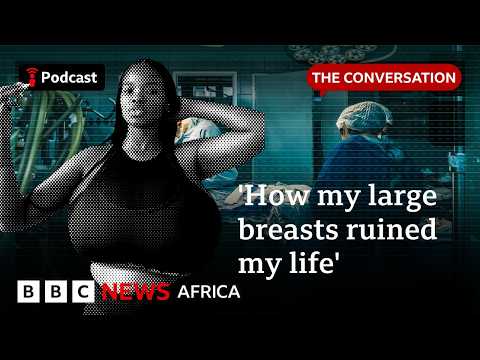
Gigantomastia: living with oversized breasts | The Conversation | Focus on Africa
20:22
BBC News Africa
Gigantomastia: living with oversized breasts | The Conversation | Focus on Africa
In some countries, breast reduction surgery is now becoming more popular than enlargements. For many women, having larger breasts may be down to genetics. But for some, breast growth is extreme, painful and life-altering. The condition, called gigantomastia, causes excessive breast tissue growth, leading to chronic pain, mobility challenges, and emotional distress. Focus on Africa podcast host Nkechi Ogbonna speaks to 25-year-old South African content creator Michelle Sekwena, who has been sharing her journey with gigantomastia, and her experience undergoing breast reduction surgery. 00:00-01:00 Coming up 01:00-02:10 The rise of breast reduction surgery 02:10-03:-40 When Michelle noticed she had gigantomastia 03:40-04:50 Michelle's life before excessive breast growth 04:50-06:50 The challenges of finding clothes 06:50-10:43 Other women's journey's with breast reduction 10:43-11:20 What is gigantomastia? 11:20-13:25 Michelle's breast reduction surgery 13:50-15:00 Ruth's breast reduction surgery 15:00-16:40 Life after Michelle's surgery 16:40-18:30 Can breasts grow back after a reduction? 18:00-19:30 The impact of gigantomastia on Michelle's relationships Presenter: Nkechi Ogbonna Producers: Fana Negash and Basma El Atti Senior Producer: Carolyne Kiambo Editors: Priya Sippy and Maryam Abdalla Subscribe: http://bit.ly/subscribetoafrica Website: https://www.bbc.com/africa Facebook: https://www.facebook.com/bbcnewsafrica/ Twitter: https://www.twitter.com/bbcafrica/ Instagram: https://www.instagram.com/bbcafrica/
Published May 30, 2026
Meeting Manosphere 'Messiah' Andrew Kibe  - BBC Africa #shorts
1:30
BBC News Africa
Meeting Manosphere 'Messiah' Andrew Kibe - BBC Africa #shorts
"If anybody is really my fan, the only thing I tell them is make sure you send me M-Pesa [money via a Kenyan app]."⁣ ⁣ Andrew Kibe is a household name in Kenya who promotes male self-empowerment and misogyny on social media. ⁣ ⁣ It started in the West with influencers like Andrew Tate. Now the Manosphere has gone global - with copycats from Africa to Latin America attracting huge audiences and the cash to match.⁣ ⁣ Two of the influencers the BBC has investigated include Kibe and El Temach, one of Latin America’s biggest manosphere influencers, who have repeatedly attacked single mothers, and regularly accused women of being "gold diggers" who manipulate men.⁣ ⁣ Both of the influencers, the BBC found, are earning large sums of money from their platforms.⁣ ⁣ El Temach and Kibe both strongly deny their content is misogynistic, with Kibe - in an interview with the BBC - even disputing the existence of the concept. ⁣ ⁣ Kibe, when challenged on his misogynistic content, denied this term applied to him and said: "No man hates a woman. We love you - we are like gods to you, worship us."⁣ 📽️ Watch Manosphere Messiahs now: https://youtu.be/JhVOIpK1t-E ---------------- This is the official BBC World Service YouTube channel. If you like what we do, you can also find us here: Instagram 👉🏽 https://www.instagram.com/bbcworldservice Twitter 👉🏽 https://twitter.com/bbcworldservice Facebook 👉🏽 https://facebook.com/bbcworldservice BBC World Service website 👉🏽 https://www.bbc.co.uk/worldserviceradio Thanks for watching and subscribing! #Masculinity #Documentary #Manosphere #GenderEquality #ElTemach #AndrewKibe #AndrewTate #BBCAfricaEye
Published May 28, 2026
Are billionaires good for Africa? | The Conversation | Focus on Africa
25:33
BBC News Africa
Are billionaires good for Africa? | The Conversation | Focus on Africa
Twenty-five years ago, Africa had no dollar billionaires. Today, there are 23, with a combined net worth of more than $100 billion. According to Oxfam, the continent’s four richest individuals now own more wealth than half of Africa’s population combined. As billionaire wealth continues to grow alongside rising inequality, an important question emerges: are billionaires good for Africa? In this episode of the Focus on Africa Podcast, host Charles Gitonga sits down with Tanzanian businessman and philanthropist Mohammed Dewji - Africa’s youngest billionaire - to discuss how he built his fortune, the role of wealth creation on the continent, and whether Africa’s billionaires have a responsibility to help close the widening inequality gap. 00:00 Coming up 00:40 How much is Mohammed Dewji worth? 02:10 Quick-fire questions 04:00 What does it feel like to be a billionaire? 05:10 The challenges of becoming wealthy 07:20 The origins of Mohammed Dewji's family business 08:25 Expanding the business into manufacturing 09:30 Did Mohammed Dewji think he would become a billionaire? 10:49 Celebrating billionaire status 13:00 Hearing from Oxfam on inequality in Africa 15:50 Mohammed Dewji on creating employment and philanthrophy 18:30 Taxes for the super-rich 19:30 Do we need to change the system to tackle inequality? 22:35 Philanthropy and giving back Presenter: Charles Gitonga Producers: Fana Negash and Basma El Atti Senior Producer: Carolyne Kiambo Editors: Priya Sippy and Maryam Abdalla Subscribe: http://bit.ly/subscribetoafrica Website: https://www.bbc.com/africa Facebook: https://www.facebook.com/bbcnewsafrica/ Twitter: https://www.twitter.com/bbcafrica/ Instagram: https://www.instagram.com/bbcafrica/
Published May 23, 2026