All Cached YouTube Channel Videos

Reset
23,647 videos found Showing 24 on page 365 of 986
Clear Filters
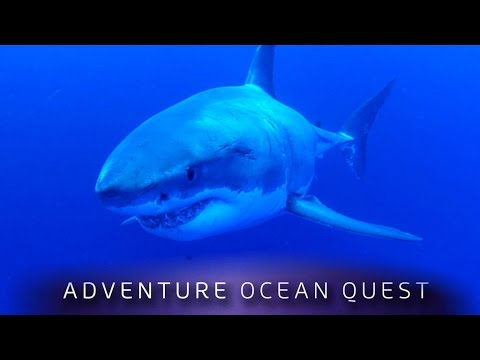
► Adventure Ocean Quest - The White Sharks of Guadalupe (FULL Documentary)
52:13
Free Documentary
► Adventure Ocean Quest - The White Sharks of Guadalupe (FULL Documentary)
The White Sharks of Guadalupe: Up to 7 metres of muscle and teeth, packed into an agile and streamlined body that can weigh in at 2250kg – this is the great white shark, one of the most infamous hunters on Earth. But the reality is that these sharks may disappear from our oceans altogether within the next 20 years. Their terrifying reputation is part myth, part reality, rooted in their instinct to hunt and kill whatever looks like a good prey animal … and that can include human beings. But how far is their killer-reputation justified? Are great white sharks really the blood-thirsty loners we imagine them to be? Dr. Mauricio Hoyos is a scientist working on the behaviour and ecology of sharks. He wants to find out why they follow certain patterns of movements, including longdistance travels. The usual methods of getting close to great whites to study them closely and form impressions of their population cross-section include caged dives and diving with airtanks. But these techniques are now known to affect the sharks’ behaviour: the predators’ extraordinary electrical sensory systems react to the galvanic properties of metal. In addition, the sharks are often lured closer with bloody bait, a technique that undoubtedly increases the animals’ aggression and prey drive, which makes them uncomfortably dangerous diving partners. Furthermore, caged dives entirely rely on the animals coming to the researchers in order to take detailed notes on each individual, but the success of this depends on the sharks’ mood and willingness to approach the cage. Frederic is able to approach the animals and is treated entirely differently by them compared to conventional divers. His very basic equipment means that there is less chance of it interfering with the sharks’ normal and natural behaviour, which allows him to get close to them without triggering aggression. He dives with the sharks without a cage, without any form of protection – just Frederic and two other freedivers versus the predators in the water. They watch each other’s backs, because the sharks are known to attack mostly from behind. But freediving is the very thing that makes Frederic’s diving encounter with the great whites a safer experience. Frederic is likely to get much closer to the sharks than is normally possible, and in this way is able to assess the animals in more detail. Frederic’s assignment also includes an assessment of the sharks’ behaviour. This is also extremely difficult under normal conditions, when diving equipment interferes with the sharks’ behaviour. As such very little is known about the great whites’ detailed behaviour, and Frederic’s dives with them is an unprecedented window into their lives. Since Christian is there to document Frederic’s finding, the scientist is able to try to assess and interpret the behaviour witnessed by the freedivers. Since Great Whites have such a fearsome reputation, Frederic’s interactions with them in the water in itself provide the researchers with interesting insights into their interactions with humans. How and why does their behaviour differ towards a diver with conventional equipment compared to a freediver like Frederic and his two friends: This is an experiment that has never been documented before. To gain more insights into approaching fierce predators like the great white shark, Christian and Frederic have to be extremely well prepared. One thing is certain: with a predator like this, nothing can be left to chance. It is their success as a predator and their huge potential to inflict hideous damage that has made it so difficult to study them in detail and to assess their behaviour adequately from close quarters.
Published Nov 13, 2015
Pakistan Seeks Two Week Extension For Iran | Balance of Power 04/07/2026
47:52
Bloomberg Television
Pakistan Seeks Two Week Extension For Iran | Balance of Power 04/07/2026
"Balance of Power: Late Edition" focuses on the intersection of politics and global business. On today's show, Republican Congressman Mike Lawler of New York discusses Trump's rhetoric around the war with Iran ahead of an 8pm deadline for Tehran to open the Strait of Hormuz. Evelyn Farkas, Executive Director of the McCain Institute and Former Deputy Assistant Secretary of Defense for Russia, Ukraine, and Eurasia in the Obama Administration, says economic incentives, not threats against civilian infrastructure, provide the strongest leverage with Tehran, and cautions that the US "will not" achieve regime change in Iran. Patrick Murphy, Former Acting Secretary of the Army during the Obama administration and Former Democratic Congressman from Pennsylvania, says the worst-case scenario in Iran would involve strikes on civilian infrastructure, stressing any military action must be proportional and legally justified. Chapters: 00:00:00 - Balance of Power: Late Edition Begins 00:01:13 - Kate Sullivan on The New Proposal By Pakistan Seeking Two Week Extension for Iran 00:03:23 - Rep. Mike Lawler (R-NY) Reacts to Pres. Trump’s Rhetoric Around War With Iran, War Powers Resolution, If Congress Will Need to Act 00:14:18 - Power Moves: Top Financial Stories Of The Day 00:17:47 - Evelyn Farkas, McCain Institute Executive Director, Discusses If Two Week Extension Will Happen, Cautions US Will Not Achieve Regime Change in Iran 00:24:56 - Jennifer Welch on Could US Military Act As Efficiently as President Suggests, Can Strait of Hormuz Be Reopened 00:28:20 - Patrick Murphy, Fmr. Acting Secretary of the Army During Obama Admin., on Expectations of What Will Happen Post Deadline 00:36:28 - Power Brief: Top Stories Watching Tonight 00:38:03 - Political Panel React to Special Election Runoff for Georgia House Seat, Some Republicans Going Against Pres. Trump’s Iran Deadline -------- More on Bloomberg Television and Markets Like this video? Subscribe and turn on notifications so you don't miss any videos from Bloomberg Markets & Finance: https://tinyurl.com/ysu5b8a9 Visit http://www.bloomberg.com for business news & analysis, up-to-the-minute market data, features, profiles and more. Connect with Bloomberg Television on: X: https://twitter.com/BloombergTV Facebook: https://www.facebook.com/BloombergTelevision Instagram: https://www.instagram.com/bloombergtv/ Connect with Bloomberg Business on: X: https://twitter.com/business Facebook: https://www.facebook.com/bloombergbusiness Instagram: https://www.instagram.com/bloombergbusiness/ TikTok: https://www.tiktok.com/@bloombergbusiness?lang=en Reddit: https://www.reddit.com/r/bloomberg/ LinkedIn: https://www.linkedin.com/company/bloomberg-news/ More from Bloomberg: Bloomberg Radio: https://twitter.com/BloombergRadio Bloomberg Surveillance: https://twitter.com/bsurveillance Bloomberg Politics: https://twitter.com/bpolitics Bloomberg Originals: https://twitter.com/bbgoriginals Watch more on YouTube: Bloomberg Technology: https://www.youtube.com/@BloombergTechnology Bloomberg Originals: https://www.youtube.com/@business Bloomberg Quicktake: https://www.youtube.com/@BloombergQuicktake Bloomberg Espanol: https://www.youtube.com/@bloomberg_espanol Bloomberg Podcasts: https://www.youtube.com/@BloombergPodcasts
Published Apr 7, 2026
► Adventure Ocean Quest - Shark Paradise of Polynesia (FULL Documentary)
52:05
Free Documentary
► Adventure Ocean Quest - Shark Paradise of Polynesia (FULL Documentary)
The waters off the Rangiroa Atoll in French Polynesia are home to an astonishing creature, a true survivor from an age when dinosaurs roamed the Earth around 400 million years ago: the great hammerhead shark. At up to 6 metres in length, they are imposing predators with an array of incredible sensory organs housed in their distinctive hammer-shaped heads. But there are still many unanswered questions about these mysterious creatures. Marine biologist Dr Johan Mourier of the University of Perpignan is dedicated to exploring the behaviour and genetic make-up of great hammerhead sharks to help preserve this endangered species in the wild. In the last 25 years alone, their world population has shrunk by about 80%. Yet very little is known about them. Dr Mourier wants to get to the bottom of the sharks’ migratory patterns, as well as their social behaviour. By tagging individual sharks with GPS locators, he hopes to establish where the animals go, what their migration routes are and where they are most threatened. It is becoming increasingly clear that sharks tend to move very quickly and deliberately between different fishing grounds. Is this also true for the Great Hammerheads? Are changes in these traditional fishing grounds threatening the hammerheads’ survival? The extreme shyness of these mighty predators makes them difficult research subjects. To make matters worse, great hammerheads are loners, unlike their common hammerhead cousins. And since tagging is usually done by using airtanks, it is very difficult to approach these shy individuals. This is where Frederic’s silent and calm approach underwater makes all the difference: Dr Mourier is working together with Fred to get closer to the animals than ever before. This gives him not only the chance to study their behaviour up close, he is even able to select individuals for tagging to reflect a cross-section of the population. The researchers are able to track the tagged sharks and plot their migratory patterns for the very first time. For Frederic, this undertaking is not only exciting, it is seriously dangerous and requires months of preparation and training. Approaching a predator like this one in open water is not for the faint-hearted, especially since it is thought that sharks are able to ‘feel fear’ and respond to it aggressively. On Frederic and Christian’s arrival in Papete, the capital of French Polynesia, Dr Mourier diligently highlights the risks and pitfalls of trying to dive with great hammerhead sharks: they are powerful predators, not to be underestimated. Frederic and Christian have their work cut out. They have to plan each dive meticulously – not least how Christian and his diving equipment can stay close enough to Frederic to document his findings without disturbing the sharks. Minimising potential risks is also top of their agenda. Test dives perfect their technique and illustrate just how abundant and stunning the local marine life is. They come across many shark species: Silvertips, oceanic white tips, grey reef sharks, lemmon sharks and many others. Dr. Mourir shows and explains their nursery: bays with hundreds of baby sharks. No matter which shark species Frederic wants to approach, he cannot afford to panic. He must remain calm and in control – instinctive reactions like sudden, hecticmovements could be detrimental. Loose control, and it could cost him his life. The tagging and sampling process in itself is even more dangerous than the initial approach: Frederic has to use a harpoon to dart the sharks from their immediate vicinity. The tagging could be interpreted as a threat and prompt an attack. But luck is on their side. After many days Fred finally can set the tags near the dorsal fin of two great hammerheads. This is the crucial moment Dr Mourier has been waiting for: the tags will give him a unique chance to track the sharks’ movements. A huge success for Frederic, Christian and the research team. The insights gained into the great hammerheads migration patterns and their genetic make-up will combine to paint a much more accurate picture of these elusive predators’ lives. For science today, this undertaking is truly uncharted territory.
Published Nov 13, 2015
Iran Deadline Looms Over Markets | The Close 4/7/2026
1:32:13
Bloomberg Television
Iran Deadline Looms Over Markets | The Close 4/7/2026
Bloomberg Television brings you the latest news and analysis leading up to the final minutes and seconds before and after the closing bell on Wall Street. Today's guests are BlackRock’s Rick Rieder, Council on Foreign Relations President Emeritus Richard Haass, Partners Group Chief Investment Strategist Anastasia Amoroso, DoubleLine Capital’s Jeffrey Sherman, Marathon Asset Management CEO Bruce Richards, & Veriten Energy’s Arjun Murti. Chapters: 00:00:00 - Bloomberg The Close 00:03:21 - BlackRock’s Rick Rieder 00:20:36 - Top Calls 00:21:56 - Mike McGlone, Bloomberg Intelligence 00:25:46 - Council on Foreign Relations’ Richard Haass 00:33:56 - Norah Mulinda, Bloomberg News 00:39:32 - Partners Group’s Anastasia Amoroso 00:45:32 - Closing Bell 00:59:39 - DoubleLine Capital’s Jeffrey Sherman 01:08:33 - George Ferguson, Bloomberg Intelligence 01:11:09 - Marathon Asset Management CEO Bruce Richards 01:22:50 - Nick Wadhams, Bloomberg News 01:25:28 - Veriten Energy’s Arjun Murti 01:30:59 - What to Watch -------- More on Bloomberg Television and Markets Like this video? Subscribe and turn on notifications so you don't miss any videos from Bloomberg Markets & Finance: https://tinyurl.com/ysu5b8a9 Visit http://www.bloomberg.com for business news & analysis, up-to-the-minute market data, features, profiles and more. Connect with Bloomberg Television on: X: https://twitter.com/BloombergTV Facebook: https://www.facebook.com/BloombergTelevision Instagram: https://www.instagram.com/bloombergtv/ Connect with Bloomberg Business on: X: https://twitter.com/business Facebook: https://www.facebook.com/bloombergbusiness Instagram: https://www.instagram.com/bloombergbusiness/ TikTok: https://www.tiktok.com/@bloombergbusiness?lang=en Reddit: https://www.reddit.com/r/bloomberg/ LinkedIn: https://www.linkedin.com/company/bloomberg-news/ More from Bloomberg: Bloomberg Radio: https://twitter.com/BloombergRadio Bloomberg Surveillance: https://twitter.com/bsurveillance Bloomberg Politics: https://twitter.com/bpolitics Bloomberg Originals: https://twitter.com/bbgoriginals Watch more on YouTube: Bloomberg Technology: https://www.youtube.com/@BloombergTechnology Bloomberg Originals: https://www.youtube.com/@business Bloomberg Quicktake: https://www.youtube.com/@BloombergQuicktake Bloomberg Espanol: https://www.youtube.com/@bloomberg_espanol Bloomberg Podcasts: https://www.youtube.com/@BloombergPodcasts
Published Apr 7, 2026
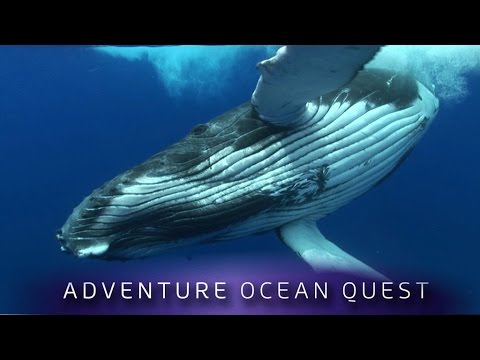
► Adventure Ocean Quest - The Giants of Rurutu (FULL Documentary)
52:01
Free Documentary
► Adventure Ocean Quest - The Giants of Rurutu (FULL Documentary)
Humpback whales are amongst the biggest known mammals on Earth, weighing in at around 36.000kg, but by the early 1960s, after 34 million years on this planet, these gentle, majestic giants had been hunted almost to extinction. With their populations now in partial recovery, it is once again possible to find humpback whales around Rurutu in Polynesian waters. They congregate here between July and November to give birth to a new generation, and to mate. The newborns are prepared for a life of migration, covering thousands of kilometres every single year. Dr Michael Poole, Director of the Marine Mammal Research Program at Moorea in French Polynesia and Dr. Cecile Gaspar are trying to establish a comprehensive photographic cataloguing system of the whales that should enable close monitoring of this fragile population. Until now, the identification of individuals has been restricted to working from above water and identifying the whales according to the markings on their tail fins. Identifying whales from the water surface is extremely limiting: not only is it reliant on the whales lifting their fins clearly visible out of the water, but it also only supplies partial information. Skin patterns on heads and undersides, as well as the whales’ sex, age and behaviour can only be recorded below the water surface. A ban on scuba-diving is partly responsible for the current researchers’ approach, as well as the fact that the whales can be highly intolerant of divers in the water. Frederic’s fotos and recordings of individual whales’ behaviour and physical characteristics allow Dr Cecile Gaspar to form a more accurate assessment of the humpback whale population around Rurutu, their movements and interactions. How big is it, and do individuals return every season or is there a change in the population’s make-up from one year to the next? The overriding question is if the whales in this area are particularly threatened as a result of being an isolated population, or if they are able to recover from the loss of individuals when new whales join their groups. Finding answers to these questions would have a ground-breaking impact on the way these whales are protected from over-exploitation by humans. Dr Poole calls Fred to Moorea island to see if the whales behave differently around a freediver like Frederic, who dives without the aid of oxygen tanks or rebreathers and moves like a fish. These whales are so shy, that Dr Poole expects their behaviour not to change noticeably around a noiselss diver like Frederic – they won’t see him as an unwanted intruder. To gain the whales’ trust and be able to approach them intimately, Frederic has to stay with them underwater for as long as possible in depths of up to 50 metres. This takes an incredible amount of skill and stamina even for an extremely experienced freediver like Frederic, not to mention the risk of staying underwater at such depth for long periods of time. Christian has to follow him with added sensitivity, both to avoid spooking the whales, and to follow Frederic’s lead at all times. But before they can dive, the team has to find some humpback whales in the first place … which can be extremely difficult. Local fishermen are a very important help for the researchers: they keep a lookout for humpback whales during their outings and report their findings to Fred, Christian and the team. They also add to the palette of information gained by the scientists’ observations by adding their own accounts of whale encounters. It is likely that the whales will tolerate Frederic in their midst, allowing him to succeed where a conventional diver would most likely have failed. Frederic’s aim is to approach the whales up to arm’s length, take extreme close-up images for the researchers’ whale catalogue, and take notes on their behaviours. But the strains of the long, deep dives take their toll – they are extremely exhausting and therefore dangerous. Christian and Dr Poole have to be careful and ensure that Frederic isn’t pushing himself too hard. The freediver is not one for giving up, but as impressive as this determination to succeed is, it can also be deadly. Equiped with a hydrophone Frederic records the whales’ communications. This adds a further facet to the whale catalogue the researchers are piecing together, and provide a further insight into individual whales behaviour and identity. Remarkably, the whales don’t have vocal cords and produce the songs by forcing air through their massive nasal cavities. Not only that - there is evidence that their communications reach phenomenal distances of several hundred miles. Frederic’s involvement in Dr. Poole’s and Dr. Gaspar´s humpback whale research project, and Christian’s ability to record Frederic’s work underwater, finally allow a thorough assessment of the humpback whale population around Rurutu and give a vital indication of just how healthy and robust this population is.
Published Nov 13, 2015
Why Marathon's Richards Is Worried About Direct Lending
10:30
Bloomberg Television
Why Marathon's Richards Is Worried About Direct Lending
Marathon Asset Management Chair and CEO Bruce Richards explains why he sees a correction in direct lending. Speaking on "Bloomberg The Close," Richards says software has the biggest problems in the direct lending, expecting the default rate to go to 15% in that sector. -------- More on Bloomberg Television and Markets Like this video? Subscribe and turn on notifications so you don't miss any videos from Bloomberg Markets & Finance: https://tinyurl.com/ysu5b8a9 Visit http://www.bloomberg.com for business news & analysis, up-to-the-minute market data, features, profiles and more. Connect with Bloomberg Television on: X: https://twitter.com/BloombergTV Facebook: https://www.facebook.com/BloombergTelevision Instagram: https://www.instagram.com/bloombergtv/ Connect with Bloomberg Business on: X: https://twitter.com/business Facebook: https://www.facebook.com/bloombergbusiness Instagram: https://www.instagram.com/bloombergbusiness/ TikTok: https://www.tiktok.com/@bloombergbusiness?lang=en Reddit: https://www.reddit.com/r/bloomberg/ LinkedIn: https://www.linkedin.com/company/bloomberg-news/ More from Bloomberg: Bloomberg Radio: https://twitter.com/BloombergRadio Bloomberg Surveillance: https://twitter.com/bsurveillance Bloomberg Politics: https://twitter.com/bpolitics Bloomberg Originals: https://twitter.com/bbgoriginals Watch more on YouTube: Bloomberg Technology: https://www.youtube.com/@BloombergTechnology Bloomberg Originals: https://www.youtube.com/@business Bloomberg Quicktake: https://www.youtube.com/@BloombergQuicktake Bloomberg Espanol: https://www.youtube.com/@bloomberg_espanol Bloomberg Podcasts: https://www.youtube.com/@BloombergPodcasts
Published Apr 7, 2026
Most Dangerous Ways To School | MEXICO | Free Documentary
48:00
Free Documentary
Most Dangerous Ways To School | MEXICO | Free Documentary
Most Dangerous Ways To School | MEXICO | Free Documentary Every Monday, little Lorenzo struggles alone as he makes his way over slippery scree and past steep canyons. And all this just so he can go to school and receive something to eat there. The 6-year-old lives in northwest Mexico in the extensive Sierra Madre Occidental. This is the home of his people, the Rarámuri. These indigenous peoples live well-hidden in the mountains and have hardly any contact with the outside world. Their daily lives revolve around agriculture and livestock; poverty is a big issue for the Rarámuri. To escape this fate, Lorenzo must literally overcome more than 1000 metres altitude. One small lapse of concentration, one careless step and Lorenzo could fall off the edge. At school, Teresa, Angela and Philomena sit next to him. These sisters, aged 6, 8 and 9, can see the school from their home, which sits on a plateau opposite. But to get there requires a journey of many hours, which takes them over narrow and rocky paths, onto sharp rock edges, across a stream, and - just before they reach their destination - forces them to climb again steeply uphill over smooth rocks on all fours. If it is raining, this journey becomes an almost impossible one: the stream is transformed within minutes into a torrent, and the rocks are suddenly as slippery as an ice rink. These children undertake their journey to school all by themselves. For up to four hours, they march through one of the most beautiful but also one of the most dangerous Mexican landscapes. Throughout this journey they all have only one goal in mind: to ultimately find a job in a city and lead a better life.
Published Sep 22, 2015