Elite Jamaica

Are you intrigued by the rich tapestry of Jamaica and its people? If so, this channel serves as an authoritative source for acquiring comprehensive and up-to-date information about the enchanting island of Jamaica. This is the Elite Jamaica Official Channel. Thank you for your support PayPal: https://www.paypal.me/elitejamm https://www.patreon.com/Elitejamaica Contact:1 876-450-9733 Thanks for watching. Merch coming soon 🔥

891 videos found Showing 24 on page 2 of 38
Clear Filters
Why This Place Was Left Off the Map? St Thomas, Jamaica
1:41:36
â–
Elite Jamaica
Why This Place Was Left Off the Map? St Thomas, Jamaica
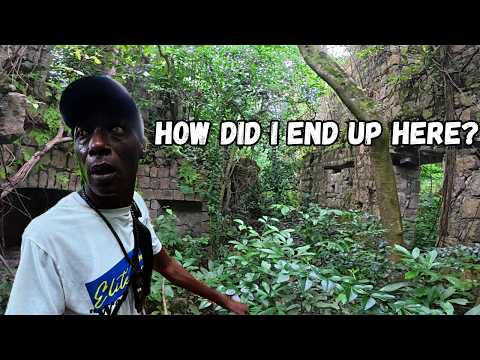
I Hiked Into the Middle of Nowhere to find This Place Thanks for your support Https://PayPal.me/elitejamm Somewhere in the hills of Eastern St. Thomas lies the haunting remains of a grand 1700s plantation mansion. I came across mentions of this place while researching old maps, including the 1804 James Robertson map — the most detailed plantation map of Jamaica. At first, I couldn’t clearly identify it, which raised one question: why was a massive estate like this so hard to find? So I decided to hike out and find it for myself. The journey wasn’t easy. Thick bush, wrong turns, muddy ground, and long stretches with no clear path. But what I eventually found was far bigger and more powerful than I expected — the ruins of Ladyfield, a former coffee plantation once owned by Philip Forsythe, part of Jamaica’s forgotten coffee history. This video isn’t just about ruins. It’s about research, walking the land, and uncovering stories that were never meant to be easy. If you’re interested in Jamaican history, hidden plantations, off-grid exploration, and the stories that don’t make it into textbooks — this one is for you. 📍 Eastern St. Thomas, Jamaica 🎥 On foot. No road. No signs. #EliteJamaica #JamaicanHistory #HiddenInTheHills #PlantationRuins #CoffeeHistory #StThomasJamaica #OffGridJamaica #ForgottenHistory #Ladyfieldgreathouse #Ladyfield
Published Jan 29, 2026
This IMPOSSIBLE Ruin will Blow Your Mind!
1:28:21
â–
Elite Jamaica
This IMPOSSIBLE Ruin will Blow Your Mind!
Thanks for your support Https://PayPal.me/elitejamm While searching for new places to explore on Google Earth, I noticed a strange stone structure sitting right along the coastline of Prospect, St. Thomas. At first glance, it looked like an old fort — but the more I looked, the more questions it raised. Was it defensive? Was it part of a plantation wharf? Or was it something in between? In this vlog, I head out to investigate what remains of Prospect Plantation, a historic sugar estate once owned by Charles Blair. Historical estate records show that Prospect was a major operation, supported by a large labour force and livestock, with inventories listing 193 enslaved people and 101 head of cattle, highlighting the scale and power of the estate during the plantation era. Before searching for the coastal structure, I decided to first try locating the Prospect sugar plantation ruins, which are marked in the area but sit within the modern Prospect Scheme — meaning access and visibility are uncertain. Whether the great house still survives or not, the ruins connected to this estate tell a deeper story about sugar, slavery, coastal trade, and control in eastern Jamaica. This is not folklore. These are real remnants of Jamaica’s plantation system, slowly disappearing along the coastline. Join me as I explore, document, and question what history left behind. #ProspectPlantation #StThomasJamaica #JamaicanHistory #SugarPlantation #ColonialJamaica #JamaicaHeritage #PlantationRuins #EliteJamaica #HiddenHistory #JamaicaExploration
Published Jan 20, 2026
This Compound was Hidden from the public until I stumbled upon it.
1:33:41
â–
Elite Jamaica
This Compound was Hidden from the public until I stumbled upon it.
Thanks for your support: Https://PayPal.me/elitejamm While searching through Google Earth and comparing it with my old 1804 map of Jamaica, I noticed something that didn’t make sense. What appeared to be ruins, hidden deep in the hills of White Horses, St Thomas. Curiosity got the better of me, so I decided to go and find it. What I discovered wasn’t just another abandoned structure. It led me to Creighton Hall — a forgotten plantation estate tied to the Clarke family, one of the early political and landholding families of colonial Jamaica. Even more surprising, I found the grave of Edward Clarke, a Member of Assembly for the old parish of St David. In this video, we explore the history of Creighton Hall, the Clarke family’s role in St Thomas, and how estates like this quietly shaped Jamaica’s colonial past. This is not the Creighton Hall most people know — this is an earlier, lesser-known site that history seems to have moved on from. If you’re interested in Jamaica’s hidden history, abandoned estates, plantation ruins, and the stories that were never properly recorded, this video is for you. 👉 Like the video if you enjoy this type of historical exploration 👉 Subscribe to Elite Jamaica for more deep dives into Jamaica’s forgotten past 👉 Comment below if you’ve ever heard of Creighton Hall or the Clarke family before The Coptics: Largest Religious Durg Dealers in Jamaicas history: https://youtu.be/CF7L3Rj2rQo Hidden Ruins https://youtu.be/EQ1SSVabrR8 #CreightonHall #EdwardClarke #StThomasJamaica #JamaicaHistory #HiddenHistory #AbandonedJamaica #PlantationRuins #ColonialJamaica #EliteJamaica #ForgottenHistory
Published Jan 18, 2026
The Bog Walk Tube Tragedy (1904) — Was It Really an accident?
24:43
â–
Elite Jamaica
The Bog Walk Tube Tragedy (1904) — Was It Really an accident?
No Valves. No Escape. Thirty-Three Dead. On June 24th, 1904, thirty-three Jamaican workers died inside a massive iron water conduit in the Rio Cobre Gorge near Bog Walk, St. Catherine. Officially, it was labeled an accident. But was it? This documentary-style analysis revisits the Bog Walk Tube tragedy not to retell the familiar story, but to examine the system itself — the engineering, the procedures, the safeguards that existed, and the ones that did not. The Bog Walk Tube was part of one of Jamaica’s earliest hydroelectric systems, built to power Kingston’s electric tramway. It was a high-energy, pressurized conduit that required strict isolation before men were sent inside for maintenance. On that morning, water entered the tube while workers were still inside. They had no internal controls, no emergency shutoff, no redundancy, and limited escape routes. By reconstructing how the system functioned and how water could only have entered under specific mechanical or procedural failures, this video questions whether the word “accident” adequately explains what happened. This is not speculation. It is engineering logic, historical record, and systemic analysis. The Bog Walk Tube tragedy raises deeper questions about early industrial infrastructure in colonial Jamaica, worker safety, responsibility, and why no full technical investigation was ever preserved. This is not about rewriting history. It is about finishing it. #BogWalkTube #JamaicanHistory #ForgottenHistory #IndustrialDisaster #ColonialJamaica #EngineeringFailure #HydroelectricHistory #RioCobre #EliteJamaica #HistoryDocumentary
Published Jan 13, 2026
Jamaica’s Ironworks and the Question Behind the Industrial Revolution
13:20
â–
Elite Jamaica
Jamaica’s Ironworks and the Question Behind the Industrial Revolution
What if one of the most important technologies in British history wasn’t British at all? Before iron ships, iron cannons, and the Industrial Revolution, Britain faced a critical problem: its iron was brittle, unreliable, and unfit for empire. History credits Henry Cort with solving this problem — but newly examined records reveal a different origin. This video uncovers the Jamaican origins of mass-produced wrought iron, developed by highly skilled Black metallurgists in the late 18th century. Their process — involving rolling mills adapted from Jamaican sugar technology — was later seized, transferred to Britain, patented, and rebranded as British innovation. Drawing from shipping logs, correspondence, industrial records, and military concerns, this investigation shows how stolen metallurgical knowledge removed a major bottleneck in British naval and industrial power — and how the original innovators were erased from history. This is not revisionism. It is restoration. Topics Covered: • Wrought iron vs cast iron • Jamaican ironworks and Black metallurgical expertise • Henry Cort and the “Cort Process” • Industrial espionage and imperial appropriation • Iron, empire, and military power • Why Black innovation disappears from textbooks #IndustrialRevolution #JamaicanHistory #BlackInventors #ErasedHistory #StolenInnovation #BritishEmpire #AfricanMetallurgy #HiddenHistory #Colonialism #HistoryMatters
Published Jan 6, 2026
Leonard Howell & Pinnacle — The First Rasta and Jamaica’s Forbidden Community
21:46
â–
Elite Jamaica
Leonard Howell & Pinnacle — The First Rasta and Jamaica’s Forbidden Community
Leonard Howell & Pinnacle — The First Rasta and Jamaica’s Forbidden Community Leonard Percival Howell was more than a preacher — he was the first sustained voice of the Rastafari movement and the founder of Pinnacle, the largest Rastafari community ever established in Jamaica. In the 1930s and 40s, Howell challenged British colonial authority by declaring Haile Selassie I as the living Messiah, rejecting European Christianity, and promoting Black self-determination, African identity, and economic independence. For this, he was arrested, imprisoned, declared insane, surveilled for decades, and his community was violently dismantled by the colonial state. This documentary traces: • Howell’s early life and radicalization • The birth of Rastafari theology • The rise of Pinnacle as a self-sustaining community • Colonial repression, police raids, and state violence • Howell’s persecution, final years, and posthumous recognition Pinnacle did not fail. It was dismantled because it worked. This is the story of The First Rasta — and the movement that survived long after the settlement was erased. 📌 Produced by Elite Jamaica Official Channel #TheFirstRasta #LeonardHowell #PinnacleJamaica #RastafariHistory #BlackHistory #PanAfricanism #JamaicanHistory #HaileSelassie #ColonialResistance #EliteJamaica Thanks for watching
Published Dec 24, 2025
Alexander Bedward: The Prophet Who Terrified Colonial Jamaica
17:24
â–
Elite Jamaica
Alexander Bedward: The Prophet Who Terrified Colonial Jamaica
Alexander Bedward: The Prophet Who Terrified Colonial Jamaica On New Year’s Eve, 1920, thousands of Jamaicans gathered in August Town to witness what they believed would be a miracle. Alexander Bedward — preacher, healer, and leader of one of the largest Black mass movements in Jamaican history — declared he would ascend into heaven. But that moment was only the end of a much larger story. Long before Marcus Garvey. Long before Rastafari. Long before Jamaica openly spoke the language of Black pride and resistance — Alexander Bedward was already doing it. Not through politics. Not through violence. But through faith, community, and defiance. This documentary explores the life, rise, and downfall of Alexander Bedward — from his early years after Emancipation, to his experiences on the Panama Canal, to the explosive growth of Bedwardism, and the fear he inspired in colonial authorities. Often dismissed as a madman, Bedward was in fact one of the most powerful grassroots leaders in Caribbean history. His movement shaped Garveyism, influenced early Rastafari, and revealed how colonial power responds when poor Black people begin to believe in themselves. This is not a story about a man who thought he could fly. It is a story about belief, empire, and resistance. 📌 Chapters include: – Post-Emancipation Jamaica – The Native Baptist Movement – The Bedward Riots of 1895 – The Ascension Prophecy of 1920 – Connections to Marcus Garvey and Rastafari – Colonial repression and legacy 👍 If you enjoy deeply researched Caribbean history, remember to like, subscribe, and share. #AlexanderBedward #JamaicanHistory #CaribbeanHistory #BlackHistory #ColonialJamaica #Garveyism #RastafariOrigins #Bedwardism #AfricanSpirituality #HistoryDocumentary #ForgottenHistory
Published Dec 17, 2025
Silent Poison: Jamaica’s Forgotten Flour Massacre (Lion Head Flour)
20:02
â–
Elite Jamaica
Silent Poison: Jamaica’s Forgotten Flour Massacre (Lion Head Flour)
Silent Poison: Jamaica’s Forgotten Flour Massacre In January 1976, three Jamaican communities — Dalvey, Yallahs, and Bull Bay — were shattered by one of the most shocking public-health disasters in the nation’s history. A shipment of imported flour, milled in Europe and tainted with the deadly pesticide parathion, entered homes and bakeries without a single safety check. Within days, families fell violently ill. Seventeen people died. Dozens more were permanently changed. But how did one of the world’s most lethal nerve-poison pesticides end up in everyday food? And why did the responsible companies and authorities remain nameless, faceless, and silent? The Flour That Killed uncovers the forgotten investigation, the unanswered questions, and the troubling political backdrop of Cold War tensions that still cast shadows over the truth. Was this catastrophe a tragic accident… reckless negligence… or something far more deliberate? This documentary revisits one of Jamaica’s darkest and least-discussed tragedies — a warning about food safety, international accountability, and the stories that powerful systems prefer to bury. #TheFlourThatKilled #Jamaica1976 #PoisonedFlour #Parathion #JamaicaHistory #DocumentaryFilm #CaribbeanHistory #ColdWarEra #UntoldStories #ForgottenHistory #FoodSafety #PublicHealth #InvestigativeDocumentary #TrueHistory #ToxicTruth #HiddenDisasters
Published Dec 11, 2025
The Morning It Rained Chemicals in Jamaica — An Untold Story
19:14
â–
Elite Jamaica
The Morning It Rained Chemicals in Jamaica — An Untold Story
There are stories in Jamaica that never made the newspapers… never reached Parliament… never appeared on TVJ or JBC. But the elders remember. The farmers remember. And the land itself remembers. In the 1970s, something strange happened across St. Mary, Portland, and St. Thomas. Low-flying planes. A strange brown mist. Coconut trees dying overnight. Animals getting sick. Rashes nobody could explain. Water people were warned not to drink. No announcements. No warnings. No investigation. No answers. At the same time, the United States was conducting herbicide experiments worldwide, including “unspecified Caribbean locations,” while the CIA was active in Jamaica during the Cold War. And the symptoms the farmers described… closely resemble the effects of Agent Orange — a chemical so deadly it changed entire ecosystems. This documentary is not about blaming. It’s about asking the questions Jamaica was never allowed to ask: – Why did our coconut trees die so suddenly? – Why were planes flying low over rural districts? – Why were U.S. herbicide tests happening in the Caribbean at the exact same time? – Why were these programs secret? – And why has no government — U.S. or Jamaican — ever explained what happened? Join Elite Jamaica as we investigate one of the island’s most chilling, unspoken Cold War mysteries — a story buried under politics, silence, and decades of unanswered questions. Jamaica deserves the truth. And until the documents are released, this mystery will continue to haunt the hills, valleys, and memories of the people who lived through it. #EliteJamaica #JamaicaHistory #JamaicaDocumentary #ColdWarSecrets #CaribbeanMysteries #AgentOrange #CIASecrets #HiddenHistory #Jamaica #ColdWarJamaica #EnvironmentalMystery #UnsolvedHistory #CaribbeanHistory #JamaicanFarmers #TheSecretSpraying
Published Dec 5, 2025
Why is Electricity in Jamaica So EXPENSIVE? The real truth
13:08
â–
Elite Jamaica
Why is Electricity in Jamaica So EXPENSIVE? The real truth
Jamaica’s Hidden Electrical History: What They Never Told You Did Jamaica really get electricity before the United States? It’s a myth that has been floating around for years — especially the claim that St. Elizabeth got electricity before America. But how true is it? In this video, we dive deep into the real history behind Jamaica’s early electrification. From Kingston’s public streetlights in 1892, to the Leyden family lighting up their Black River home in 1893, Jamaica moved much faster than many people realize. We explore: • Why Jamaicans believe St. Elizabeth had electricity before the U.S. • How Kingston became one of the first Caribbean cities with public street lighting • The private generator at Waterloo in Black River • How America’s electrification really started with Edison’s Pearl Street Station • Why electricity is so expensive in Jamaica today • Myths about Jamaica’s railroads and technological “firsts” • The global race toward electricity long before Jamaica or America flipped a switch This is the full, untold story — not just about who had electricity first, but how Jamaica managed to get it so early, despite being a small British colony. If you love Jamaican history, hidden facts, and myth-busting storytelling… this one is for you. #JamaicaHistory #ElectricityHistory #BlackRiver #KingstonJamaica #StElizabeth #JamaicanMyths #EliteJamaica #HistoryDocumentary #CaribbeanHistory #JamaicaFacts #MythBusting #EdisonVsTesla #JPSBill
Published Nov 29, 2025
5 Hours in Barbados: Hidden Ruins, Lost Empires, and the Secrets of the HARP Gun
5:21:25
â–
Elite Jamaica
5 Hours in Barbados: Hidden Ruins, Lost Empires, and the Secrets of the HARP Gun
5 Hours in Barbados: Hidden Ruins, Lost Empires, and the Secrets of the HARP Gun" "Every island has a story… but few are as strange as this one. Few people realize that one of history’s most unusual experiments — and some of its strangest secrets — began on the small island of Barbados. This was the birthplace of the HARP Project, one of the earliest attempts at weather modification, and home to the massive HARP Gun — the largest ever built in the Western Hemisphere. Barbados is also the only country outside the United States where George Washington ever lived, and the house that sheltered him still stands today as a monument to that rare connection. Yet the island holds even deeper secrets — the last known descendant of the Byzantine, or Roman Empire, lived out his final daysin barbados and was buried on that very soil. Across Barbados, the echoes of history still linger: plantation houses preserved with their original furniture, the Caribbean’s largest fort still guarding the coastline, and ancient signal towers that once linked the island through fire and smoke. What purpose did the signal towers serve? Who built them? In this 5 hour compilation, we’ll journey through every place I explored during my time in Barbados — uncovering the hidden stories, the forgotten ruins, and the extraordinary past of this remarkable island. #Barbados #CaribbeanHistory #HiddenHistory #EliteJamaica #HARPProject #HARPgun #GeorgeWashington #ForgottenEmpires #RomanEmpire #ByzantineEmpire #CaribbeanSecrets #IslandMysteries #HistoricalDocumentary #LostHistory #BarbadosExploration #MysteriousIslands #HiddenRuins #CaribbeanHeritage #BarbadosStories #EliteJamaicaOfficial
Published Nov 11, 2025