Best Documentary

Real stories, amazing facts, and eye-opening documentaries—all in one channel.

3,281 videos found Showing 24 on page 130 of 137
Clear Filters
Deadliest Journeys - China : The dizzy valley of the forgotten
49:00
Best Documentary
Deadliest Journeys - China : The dizzy valley of the forgotten
The Duong valley road is the only means of access between China, Burma and Tibet. A road that is paved over the first thirty kilometres, but which quickly turns into an extremely perilous track. It’s considered the most dangerous road in China. Landslides, difficult passages where it’s impossible for vehicles to pass, mud, tunnels that are too narrow, there’s no respite for drivers. The road demands the highest concentration. The cliffs are vertiginous. The least turn of the wheel can be fatal. And when the threat isn’t coming from below, it may come from the rock walls. On this track, you cannot commit any errors. We take the road aboard an overloaded collective taxi. At the wheel is Tcheng. He’s been driving this road once a week for six years. In the taxi, we find Fong who has to get back to his remote village in the mountains. Together, they will take more than seven hours to cover less than a hundred kilometres. Troubles begin right from the start of the journey. The tunnel is too narrow. The passengers have to get out of the vehicle to widen the walls at the risk of bringing it all down. During this adventure we meet woodcutters, children who sell coal, Tibetan monks and Chinese adventurers seeking their fortunes… This road may be the one that leads to El Dorado, the El Dorado of the lead and tin mines. - Follow us on social media : Facebook : https://www.facebook.com/BestDocumentaryTV
Published Feb 28, 2018
Deadliest Journeys - Siberia, the Deadly Thaw
51:31
Best Documentary
Deadliest Journeys - Siberia, the Deadly Thaw
00:00 Every year the icy mists of Lake Baikal are the starting point for a testing journey for the men of the village of Kholodnaya on the northern shore of the lake. They must leave to carry supplies to the Evenks, reindeer herdsmen who live in isolation on the high plateaux of Siberia. 01:46 Siberian white hell 06:31 One of the region's most sacred places 11:09 Lake Baikal, a death trap 18:11 Victim of the thaw 25:55 Hunting the great Siberian grizzly bear 39:20 35 kilometers to go, with many more challenges 43:48 Farm at the end of the world For six months the herders have received no supplies. The winter has been too harsh for the supply trucks. Only Dmitri and a handful of men are prepared to take the risks in supplying these herders. They only have to travel 65 kilometers… and yet it takes them 48 hours! The spring has turned the road into a swamp. A veritable race against the clock is under way. Ruts, swollen rivers and forests: the six-wheel drive trucks will have a tough job taking on the natural elements. Sometimes there’s no other choice but to use the truck as a makeshift bulldozer to smash down the trees that block the road. When night falls with its icy temperatures, the mechanical parts are blocked with ice. And when nature forces the men to get out of the trucks another danger lurks… wolves. Further down in the valley, the thaw has transformed the Baikal into a deadly trap for those who live from it. In a very short time nothing will remain of the thick sheet of ice that has covered the lake the whole winter. Many fishermen have lost their lives on it, falling into water at 20. Because to find fish, they have to travel several kilometers across the surface of the lake, which is as big as Belgium. Anatoly, a fisherman, has just lost his best friend, whose car sank to the bottom of the lake in just seconds. Despite the danger, Anatoly has no choice but to chance the fragile melting ice. His 200 € monthly pension isn’t enough to feed himself properly. And when the lake becomes completely impracticable, they have to turn to an even more dangerous form of hunting: that of the great Siberian bear, the Grizzly. - Follow us on social media : Facebook : https://www.facebook.com/BestDocumentaryTV
Published Feb 23, 2018
Building Green - Earth power
48:04
Best Documentary
Building Green - Earth power
Before running out of oil, we better have a look under our feet, where lies a clean and inexhaustible source of energy: the heat of the Earth! The volcanic and wet country of Iceland has plenty of steam to turn into electricity, it’s the Saudi Arabia of geothermy. Plants are popping up and growing fast. Markus, a foreman in charge of building cooling towers, essential pieces on the giant plant of Hellisheidi, deals all year long with a tight schedule, non English or nor Icelandic speaking workers, storms and… a lethal poisonous gas. Gretar, the geologist, has to map the underground and inform drillers how to provide daily more power to the plant. All of them together are tapping tens of steam wells one mile down and deeper, laying miles of pipes and installing always more generators. Iceland plans to become before 2050 the first nation to free itself from fossil fuels. In France, pioneers are working on a new technology. Far away from active volcanoes and steam reservoirs, they drill much deeper, up to 3 miles and inject water into hot rocks to make their own steam. Their latest breakthroughs will allow geothermal plants to produce power at half the temperature of the steam in Iceland. But as this method has never been tested before, solutions need to be found every time a problem arises, which is… quite often. Polo, with a 10 year experience on the project, Xavier, who’s his first job it is after graduating in mechanical engineering, and all their international European crew face adversity and never give up. So far, it’s only a small-scale pilot plant, but with big dreams: showing the world that this clean and renewable energy could be used by many of us. - Follow us on social media : Facebook : https://www.facebook.com/BestDocumentaryTV
Published Feb 21, 2018
Colombia : the mole children (full documentary)
26:41
Best Documentary
Colombia : the mole children (full documentary)
200 metres underground, in unhealthy shafts, they dig… they are 9 or 10 years old and they work in the mines of Boyaca, the biggest coal deposit in Colombia. It was in 1993 that a report documented the lives of Jairo, Oscar, Jaime... the mole children. 17 years later, Edouard Bergeon found them and showed them the images they had never seen. “I’m here underground like a mole. Imagine what I’m going to end up like. I started working when I was 10. I’m 32 and I’m still down the mine. I do it for my kids, to give them food and allow them to study.” His children, his wife, his mother discover for the first time the images of Oscar aged 10 pushing his coal barrow. Jaider also has a family, which he only sees at weekends. During the week he digs coal a six-hour drive from his home. Things haven’t changed much since his childhood. At 13, Jaider was already denouncing his working conditions, “I risk my life every day and I’m scared. I know people who never came out.” The image that stays in the memory is of Jairo’s face as he comes out of the mine, panting, with a sack of coal on his back. Today Jairo has been spared the silicosis that is killing his father. He left the mine to join the army. “If I weren’t in the army, I’d still be down the mine. And tomorrow I’d be in the same condition as my father.” Jaider wanted to show his colleagues the documentary filmed 17 years ago, in which he was one of the principal characters. “Seeing such a small child with a sack of coal on his back. Out of breath… It’s very hard. When I started I was 9… before Jaider. Now you can’t make children work. The slavery of that time is over.” And yet… when Oscar takes reporters 170 metres underground... deep in the bowels of the earth, five mole children of today, five little black faces like his, stare at Jaider, the mole child of 1993. - Follow us on social media : Facebook : https://www.facebook.com/BestDocumentaryTV
Published Feb 19, 2018
Building Green - Power Tower
48:01
Best Documentary
Building Green - Power Tower
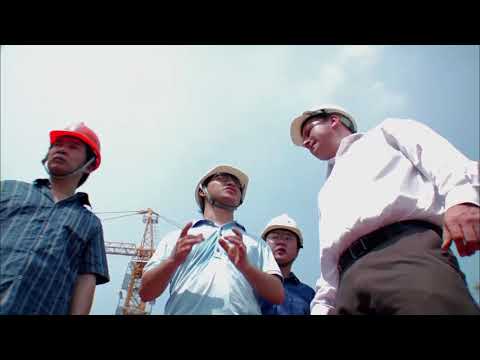
In downtown Guangzhou, China, one of the greenest structures on earth is rising. Known as Pearl River Tower, the 71-storey building will rely on just wind and sunlight for its power supply. This green skyscraper epitomizes the super tall corporate headquarter buildings of tomorrow as an iconic, high performance structure, that is designed in such harmony with its environment that it potentially produces as much energy as it consumes. The building’s sculptural form guides wind to a pair of openings at its mechanical floors. The rapid winds push turbines that generate energy for the building’s heating, ventilation and air conditioning systems. The openings also provide structural relief, by allowing wind to pass through the building instead of pressing against it. Abundant natural light, solar power enhance the building’s environmentally friendly nature. Roger Frechette, one of the most famous architect designers in sustainable buildings of the SOM architecture firm, details his conception about tomorrow’s architecture and his work in coordination with the Chinese teams to make this dream come true. Mr Ciu, manager of the Chinese construction teams, explains the numerous challenges and subtleties behind this gigantic construction site. Let’s go to the heart of action and take a front row seat in the creation of the world’s greenest skyscraper. - Follow us on social media : Facebook : https://www.facebook.com/BestDocumentaryTV
Published Feb 17, 2018
Building Green - Sun on Earth
48:02
Best Documentary
Building Green - Sun on Earth
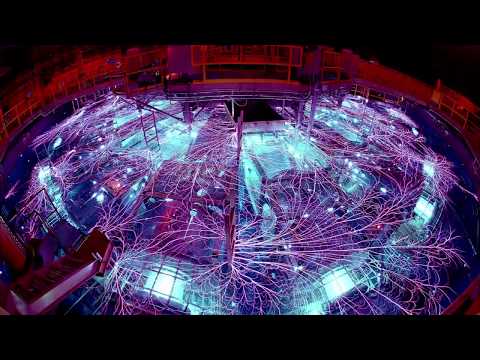
A huge global increase in energy consumption is inevitable. Renewable energies alone will not satisfy our needs. While nuclear energy is often associated with fission and its dangers, scientists across the world are trying to master its bright side. Nuclear fusion is a safe, clean and unlimited source of energy. But unfortunately, it is incredibly difficult to master. There are different ways of going about it. Three main competing paths are currently being explored : -Tokamaks, which confine a hot plasma at a temperature of one hundred million degrees in a steady state within a magnetic field. -Lasers, which are used like hammers to compress a target and make it explode. -The Z-pinch machine, which attempts to light a nuclear fire by compressing a tiny pellet of gas through an intense X-ray pulse. While the construction of Iter, the international super tokamak, is about to start in Southern France, teams are working flat out to solve physics and engineering problems. Let’s follow the team of the Tore Supra tokamak as they develop their machine and install new heating antennas. At the Megajoule Laser, 240 giant lasers are being assembled. They will fire a target in a 30-feet diameter metal sphere. Everything must be immaculately clean as a speck of dust could burn and ruin extremely costly equipment. In the Sandia laboratories, as the entire Z-machine has just been modernized to double its power, the team is already looking towards the future. In collaboration with Russia, revolutionary components are being tested. Putting their rivalries aside, all these scientists share their knowledge of plasma, the fourth state of matter after its gaseous phase. Only when the secrets of plasma are mastered will the gates to fusion open. - Follow us on social media : Facebook : https://www.facebook.com/BestDocumentaryTV
Published Feb 14, 2018
The Tick and the Bird (Wildlife Documentary)
51:35
Best Documentary
The Tick and the Bird (Wildlife Documentary)
Once upon a time, there was a flea who lived buried deep in the feathers of a Laysan Albatross. Together, they travelled across the tormented oceans of the Pacific Ocean landing only on very rare ocasions. Until one day... the albatross chooses to land on Midway an island 3000km off any land coast, to mate and start a family. Taking advantage of the physical closeness of this bird couple, the flea seizes the opportunity to explore the feathers of the female, from where she will witness the hatching of an egg. Then, the flea quickly prefers to jump onto the soft duvet of the young bird, not yet able to fly. In the nest, the young albatross discovers all the dangers which surround him, such as the penguins who come and steal food left by his parents. This provides an excellent opportunity for the flea, who decides to discover new feathers - the first of many to come. The flea will, from here on, share the same life style of the petrels, royal penguins, both adult and juvenile. In its little air bubble, the flea is protected from the pressure of the water whenever its hosts go for a dip in order to hunt for krill or anchovies. To keep a safe guard over its territory, the flea will confront tics and other lice who will have, like itself, colonised the fur of their hosts. This documentary, based on scientific research and fact, unites harmoniously the natural habits of these birds, who will be filmed by our team during 4 months in Hawaii, and digital images of the flea created through computer graphics. Awards: European Film Festival Valvert, Belgium - 2002 Best script Cristal Eagle Award International Ornithological Film Festival Menigoute, France - 2002 Best commentary Award Author: Bertrand Loyer Director: Luc Jacquet Producers : Saint Thomas Productions - Follow us on social media : Facebook : https://www.facebook.com/BestDocumentaryTV
Published Apr 23, 2017